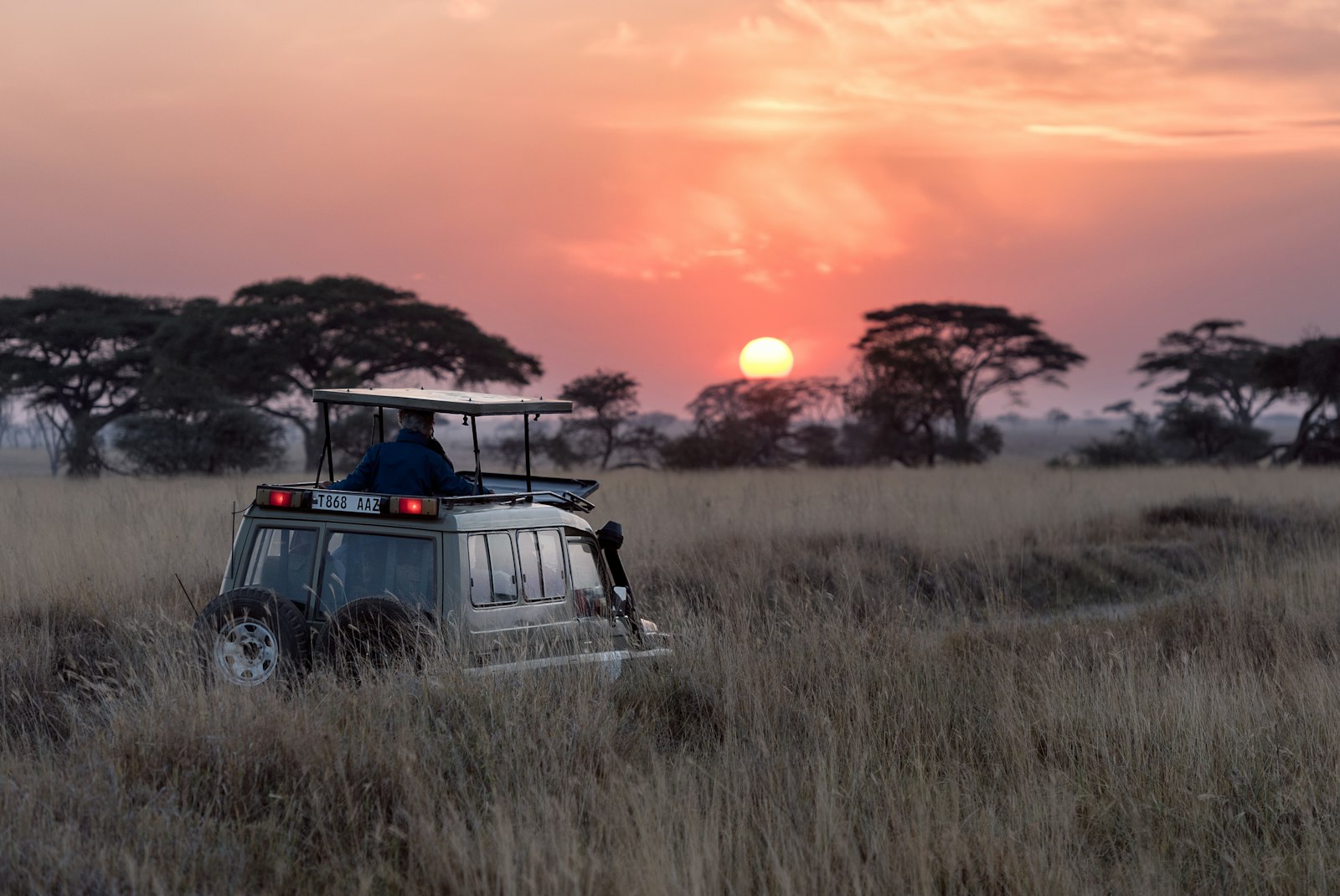
Golden-hour light across the open African bush, the setting for a luxury safari
Destination Comparison · 2 Safari Countries

South Africa vs Kenya Safari Lodges: Which Safari?

Choose South Africa's Sabi Sand for close, off-road predator viewing in a very low malaria reserve, with some of the continent's best lodge cellars. Choose Kenya's Maasai Mara for the Great Migration and the wide, cinematic plains of classic East African safari. One is intimate and easy; the other is pure spectacle.

Affiliate disclosure: when you book through links on this page we may earn a commission at no extra cost to you. We never accept payment for placement or rankings.

I taste my way around a lot of hotels, and a safari camp is the rare place where dinner and the drive are inseparable: you come off a sundowner stop and sit down to a boma fire, a cellar list and a kitchen working with almost no margin for error, hours from anywhere. South Africa and Kenya both do this brilliantly, but the safaris on either side of the table could hardly be more different.

South Africa's Sabi Sand is the connoisseur's choice for seeing animals. A private reserve sharing an unfenced border with Kruger, it lets lodges drive off-road and after dark, which is why a leopard here fills your windscreen rather than your binoculars. It is also a very low malaria area, and the lodges, Singita and Londolozi among them, set a global benchmark for design, service and, yes, wine. The trade is that it is dense bush, not big horizons, and you will not see a thousand wildebeest on the move.

Kenya's Maasai Mara is the choice for spectacle. The wide golden plains and the Great Migration, with its July-to-October river crossings, are the image most people carry of an African safari, and camps like Angama Mara and Cottar's deliver it with real style. The catch is crowds and rules inside the national reserve, and a moderate malaria zone. The honest split: South Africa for intimate, low-friction game viewing; Kenya for the great migratory theater. The full case for each is below.

At a Glance

South Africa (Sabi Sand)Kenya (Maasai Mara)
The settingDense private bush bordering KrugerWide open Rift Valley savannah
Signature drawOff-road, close-up leopard & predator viewingThe Great Migration, July–October
Off-road / night drivesYes (private reserve)Restricted in the reserve; allowed in private conservancies
Malaria riskVery low (lowest May–Oct)Moderate-risk zone
Anchor lodgesSingita (Boulders, Ebony), LondoloziAngama Mara, Cottar's 1920s Camp
Getting thereShort light-aircraft hop from Johannesburg~45-min light aircraft from Nairobi (Wilson)
Best forFirst-timers, families, predator close-ups, lodge diningThe migration, open-plains romance, balloon flights
1

South Africa (Sabi Sand), best for close predator viewing

A low-malaria private reserve where the leopards come close
Setting
Private reserve bordering Kruger
Game viewing
Off-road & night drives, Big Five
Malaria
Very low risk
Feel
Intimate, polished, easy

Why go: The quality of the sightings. Because Sabi Sand is private, lodges can leave the track to follow a leopard or a lion pride and run drives after dark, so the wildlife comes closer here than almost anywhere in Africa, and the reserve's leopards are habituated to vehicles in a way that produces extraordinary close encounters.

Sabi Sand rewards travelers who care most about seeing animals well, and about how they live between drives. The reserve shares an unfenced boundary with Kruger, so game moves freely, and the Big Five are all resident year-round, with the dry winter from roughly May to October concentrating animals at water. The lodges are the other half of the appeal: at Singita Boulders the wine cellar is recognized as one of Africa's most influential collections, built, literally, around the boulder that gives the lodge its name, with sommelier-led tastings paired to the kitchen; Londolozi, a family-run reserve of five lodges on the Sand River, ranges from the design-forward Granite Suites to the famously child-friendly Founders Camp. Bush breakfasts and fireside boma dinners are part of the rhythm. And the very low malaria risk, lowest in the dry months, makes this the easier choice for first-timers and many families.

It is the safari for a honeymoon that wants comfort as well as wildness, for a family testing the water, and for anyone who would rather watch one leopard for an hour than scan a far horizon.

Honest trade-off: Sabi Sand is bush, not big country. You get intimacy and close sightings, but not the wide, cinematic plains or the spectacle of vast moving herds, and there is no migration here. Because several lodges share traversing rights, a star sighting can draw a few vehicles, and at the top lodges you are paying among the highest nightly rates on the continent. If your dream is endless golden grassland and a thousand wildebeest, this is not it.

HotelsForKings Score9.1/10
Wildlife viewing9.4
Scenery8.7
Exclusivity8.9
Lodges & dining9.5
Access & ease9.2
Value8.6

Weighted: Wildlife 25%, Lodges & dining 20%, Scenery / Exclusivity / Access 15% each, Value 10%. Scores are HotelsForKings editorial judgments, not guest review averages.
Is Singita Sabi Sand worth it?

Our verdict on the reserve's most celebrated lodges.

Best hotels in South Africa

Where Sabi Sand sits in the wider country.

Singita vs &Beyond vs Wilderness

The safari operators behind the lodges, compared.

All comparisons

Browse every head-to-head on the site.

See all hotel comparisons →
2

Kenya (Maasai Mara), best for the Great Migration

Wide open plains, river crossings and balloons at dawn
Setting
Open Rift Valley savannah
Signature
Migration & river crossings, Jul–Oct
Malaria
Moderate-risk zone
Feel
Cinematic, classic, big

Why go: The scale and the migration. The Maasai Mara is the open, golden East Africa of the imagination, and from around July to October the wildebeest herds pour in and brave the Mara River crossings, one of the great wildlife spectacles on earth and a sight Sabi Sand simply cannot offer.

Kenya rewards travelers who want the big picture. The Mara's plains run to the horizon, the big cats hunt in the open, and a dawn hot-air balloon flight over the herds is a defining experience. The lodges match the setting: Angama Mara is suspended on the Great Rift Valley escarpment above the Mara Triangle, two intimate camps of fifteen glass-fronted tented suites each with an airstrip of its own and bush dining built into the day; Cottar's 1920s Camp, run by the same family for five generations, sits in the private 7,600-acre Olderkesi Conservancy on the Tanzanian border, eleven canvas tents dressed in antique campaign furniture, where dinner under the stars feels like a different, more romantic century. Maasai cultural visits and walking safaris add a human dimension you feel less in Sabi Sand.

It is the safari for the bucket-list migration trip, for travelers who want open-plains romance and big skies, and for anyone who has always pictured Africa as endless grassland under an enormous sky.

Honest trade-off: The Mara's fame is also its problem. Inside the national reserve, off-road driving and night drives are restricted, and a river crossing can draw a scrum of vehicles that breaks the spell; escaping that means paying up for a private conservancy such as Olderkesi, where the rules and the crowds ease. The migration is seasonal, so timing is everything, and peak months are the busiest and dearest. It is a moderate malaria zone, and transfers can be longer and dustier than in South Africa.

HotelsForKings Score9.2/10
Wildlife viewing9.6
Scenery9.5
Exclusivity8.4
Lodges & dining9.1
Access & ease8.9
Value8.8

Weighted: Wildlife 25%, Lodges & dining 20%, Scenery / Exclusivity / Access 15% each, Value 10%. Scores are HotelsForKings editorial judgments, not guest review averages.

Best safari lodges in Africa

The continent-wide shortlist, Mara camps included.

Honeymoon collection

When the migration is the trip of a lifetime.

Most exclusive hotels in the world

Where the rarest camps and lodges rank.

Top 50 hotels in the world

The global field these lodges compete in.

See all hotel comparisons →
A Planner's Note

If you can only do one and you have never been, let timing decide. Traveling in July to October and chasing the migration? Go to Kenya, and book a private conservancy like Olderkesi so a river crossing does not come with a traffic jam. Going outside those months, or bringing children, or simply wanting the surest close-up of a leopard with the lowest malaria worry? Sabi Sand is the smarter trip. And the dream itinerary pairs them: the Mara for the spectacle, then Sabi Sand for the lodges and the cellars, on one long African fortnight.

Planning a safari? Let us send the angle.

South Africa and Kenya both reward planning, the right season, the right camp, the conservancy that dodges the crowds, and the rooms and experiences worth pre-booking. Tell us which way you are leaning and we will send the months to target, the lodges worth the splurge and how to pair the two countries on one trip, one honest email at a time.

The Verdict

Go to South Africa's Sabi Sand when you want to see animals as well as they can be seen. If your priority is close, off-road, after-dark predator viewing in a very low malaria reserve, with lodges and cellars that rank among the world's best, Sabi Sand is the more intimate, more polished, more reliable safari, and the easier first trip.

Go to Kenya's Maasai Mara when you want the spectacle. If you are chasing the Great Migration, dawn balloon flights and the wide cinematic plains of classic East African safari, and you will time it to the crossings and pay up for a private conservancy, the Mara is the bigger, more romantic experience. In short: Sabi Sand to see the leopard, the Mara to see the herds.

Related Comparisons

One email. Five hotels. Sunday.

A ranked shortlist, a special offer worth booking, and the overpriced stay to skip. Straight from the editors.

Frequently Asked Questions

Is South Africa or Kenya better for a safari?

It depends on what you want to see. South Africa's Sabi Sand, a private reserve bordering Kruger, is the stronger choice for close, off-road predator viewing, especially leopard, in a very low malaria area, which also makes it easier for families and first-timers. Kenya's Maasai Mara is the better choice for the Great Migration and the wide, open plains of classic East African safari, with hot-air balloon flights and big-cat country. South Africa is the more intimate, easier trip; Kenya is the bigger spectacle.

When is the Great Migration in the Maasai Mara?

The wildebeest herds are generally in Kenya's Maasai Mara from around July to October, when the dramatic Mara River crossings take place. This window is the headline reason to choose Kenya over South Africa, but it is also the busiest and most expensive season in the Mara, so the dates need to be booked well ahead. Outside those months the migration is in Tanzania's Serengeti, though the Mara still holds excellent resident game year-round.

Which has a lower malaria risk, Sabi Sand or the Maasai Mara?

Sabi Sand. It sits in a very low malaria area, with the lowest risk during the dry winter months of roughly May to October, and lodges take extensive precautions. The Maasai Mara is in a moderate malaria-risk zone, helped a little by its altitude. Anti-malaria precautions are sensible for both, but travelers most worried about malaria, including some families with young children, often lean toward Sabi Sand for that reason. Always take current medical advice before travel.

Can you drive off-road and do night drives in both?

In the private reserves, yes; in Kenya's national reserve, not always. Sabi Sand is a private reserve, so lodges can drive off-road to follow a leopard or lion and run night drives, which is why sightings there feel so close. In Kenya, the Maasai Mara National Reserve restricts off-road driving and night drives, and vehicles can cluster at big sightings. The fix is to stay in one of the private conservancies bordering the Mara, such as Olderkesi, where off-road and night drives are allowed and vehicle numbers are capped.

What are the best luxury safari lodges in each?

In Sabi Sand, Singita (its Boulders and Ebony lodges) and Londolozi are among the most celebrated, with Singita Boulders holding one of Africa's most influential wine cellars. In Kenya, Angama Mara, perched on the Great Rift Valley escarpment above the Mara Triangle, and Cottar's 1920s Camp, a fifth-generation family camp in the private Olderkesi Conservancy, are standout choices. All four were verified as operating in 2026.

How do you get to the lodges in each country?

Both rely on small bush flights. Sabi Sand is reached by a short light-aircraft hop from Johannesburg to its airstrips, or a long road transfer. The Maasai Mara is reached by light aircraft from Nairobi's Wilson Airport, typically around 45 minutes, then a short game-drive transfer to camp. Neither is a self-drive destination at this level; the lodges arrange the flights and transfers as part of the stay.