Aman Venice ranks #16 on our 2026 list of the best luxury hotels in the world. The case below explains why — the architecture, the operating standard, the rare quality of personal service at scale, and the alternatives we measured it against.
“A 16th-century Palazzo Papadopoli on the Grand Canal with frescoed salons by Tiepolo. Twenty-four suites. The most discreet luxury address in Venice — and arguably in Italy.”
The hotel itself
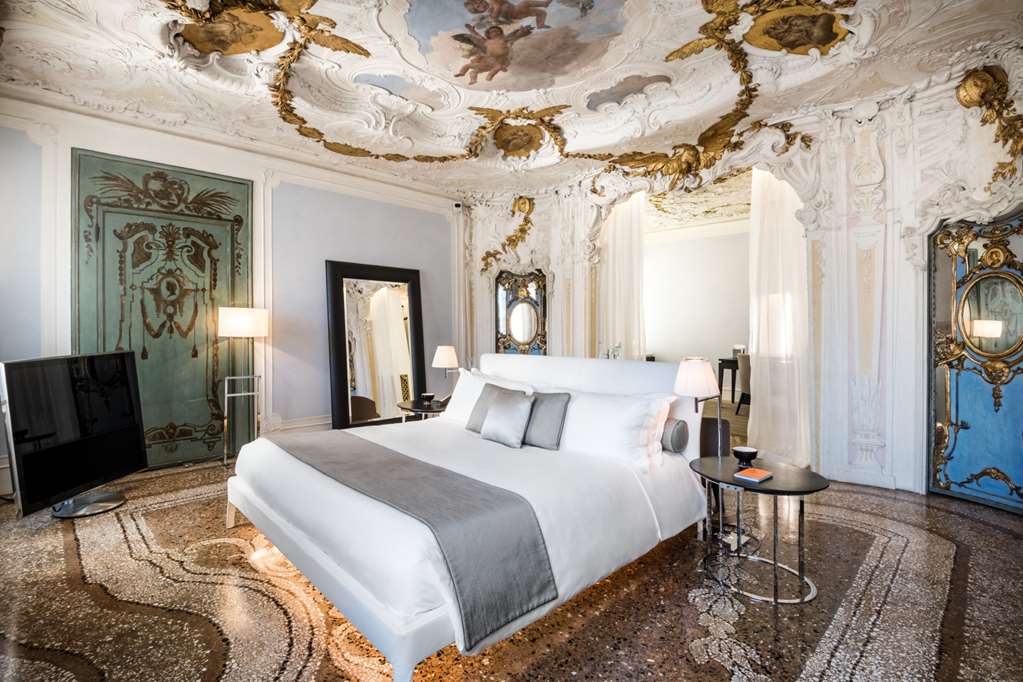
Twenty-four suites inside the 16th-century Palazzo Papadopoli, original Tiepolo and Sansovino frescoes overhead, two private gardens on the Grand Canal. Aman's first European city hotel and the most unrepeatable address in Venice.
"A 16th-century Baroque palazzo with the original Tiepolo ceiling frescoes still in place, 24 suites, two private gardens — the only ones of size on the Grand Canal — and the Aman Spa programme inside. The most decorated hotel arrival in Venice and arguably the most unrepeatable luxury hotel suite in any European city."
Aman Venice opened in 2013 inside the Palazzo Papadopoli, a Baroque masterwork built between 1550 and 1560 in the San Polo sestiere on the Grand Canal. The Papadopoli family — Greek-Venetian merchants who acquired the palazzo in the late 19th century — kept it as a private residence until the family handed it to Aman with much of the original interior decoration intact. The result is a hotel that does not simply incorporate historic elements but is, materially, the original residence: the Sala Grande's ceiling frescoes by Giambattista Tiepolo, the Sansovino-attributed reliefs in the Stanze del Tiepolo, the Sala Rossa's Sebastiano Santi neoclassical frescoes — all in their original positions, restored under the supervision of the Italian heritage authorities. Aman's restoration, led by Australian architect Jean-Michel Gathy, contributed minimal-intervention contemporary inserts and the brand's hallmark restraint, leaving the historic envelope effectively untouched.
Why it earns the rank
Hotels in great cities live or die on the bar at midnight. The lobby has to compete not just with other hotels but with the city outside it: the people who could be anywhere have a thousand other places to go. The hotels that earn world-list inclusion in city formats do something the city itself doesn't — give you a private room with a Michelin restaurant in it, a spa that erases the morning's flight, and a bar where the right people drink because they've drunk there for fifty years.
An Aman is a particular kind of hotel. The architecture is local material — basalt in Bhutan, raw stone in Italy, bleached oak in New York — and the service philosophy refuses to perform. Each property is meant to feel like a private estate the family that owns it has loaned you for the week. For a list of the world's best hotels Aman matters because the brand routinely operates above its rate card: the rooms are oversized, the spas are vast, and the food rooms cook for guests who could afford to be anywhere.
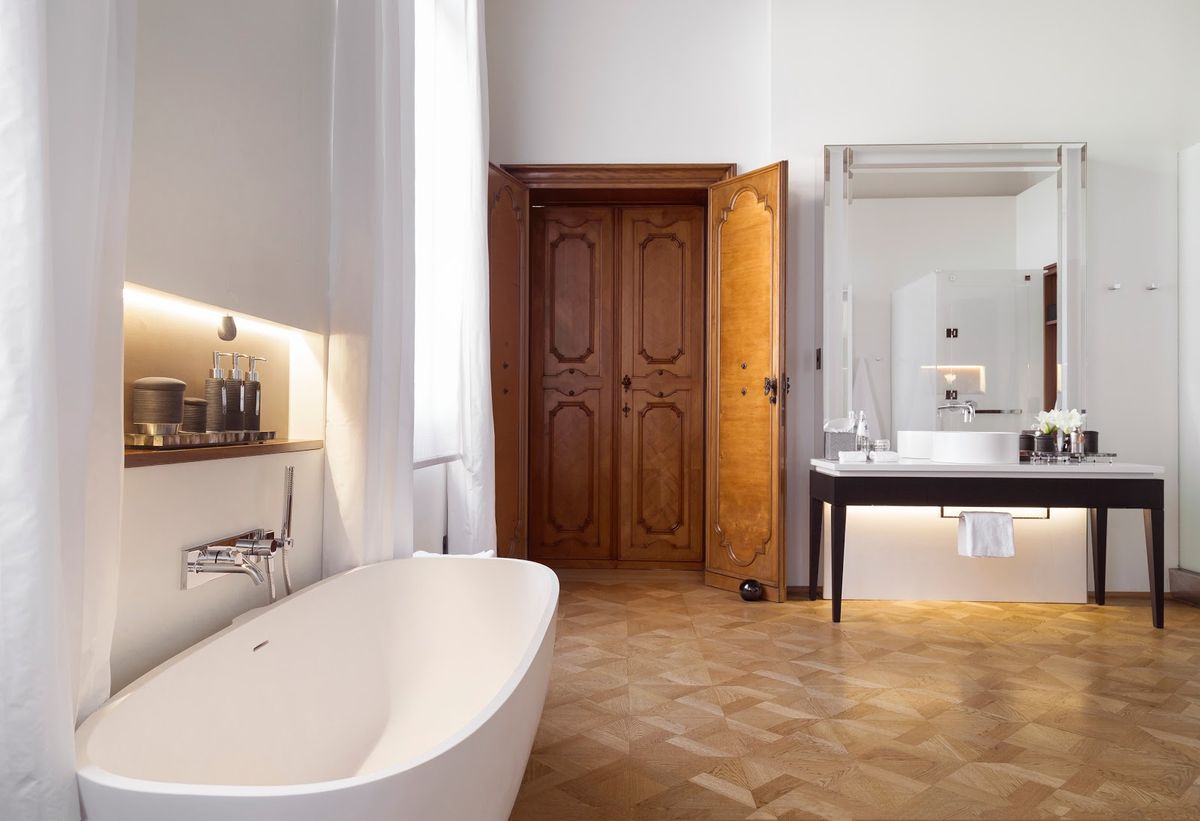
There are 24 suites, distributed across the palazzo's three principal floors — the Piano Nobile (the formal noble apartments), the upper Piano Nobile (where the Papadopoli family bedrooms originally sat), and the recent Stanze del Tiepolo wing. The signature suites — the Alcova Tiepolo Suite, the Sansovino Stanza, the Papadopoli Suite — are the rooms with the original frescoes and ornamental ceilings still in place; sleeping under a 1750s Tiepolo is the experience on offer, and the experience the rate is built around. The base-category Palazzo Stanzas are smaller in scale (35-50 square metres) and mostly garden- or lateral-canal facing, but they share the same hardware, the same bathroom programme, and the same access to the rest of the property. Bathrooms across the property use Pietra d'Istria and Carrara marble; the room hardware — climate, technology, beds, lighting — is at the global Aman standard, retrofitted into the historic shell without compromising it.
The hotel's two gardens are the unrepeatable amenity. The Bocco Garden, on the calle side, is the larger; the Marco Polo Garden, opening directly onto the Grand Canal at the rear of the palazzo, is the more theatrical — and one of only a handful of private waterside gardens in the entire historic centre. Breakfast is served in the gardens in season; the Arva restaurant, on the Piano Nobile, runs a contemporary Italian programme; the Yellow Bar (so named for the canary-yellow walls) is the cocktail destination. The Aman Spa, located in the lower palazzo, runs the brand's signature wellness programmes — facial, body, and integrated multi-day journeys. The hotel does not have a swimming pool, in keeping with the historic-palazzo footprint; for guests for whom a pool matters, the recommendation is the Cipriani.
Where it sits in the global field
The most direct comparisons in this top-50 are Four Seasons Hotel at The Surf Club in Miami (#15), Aman Tokyo in Tokyo (#17), Cheval Blanc Randheli in Maldives (#14). Aman Venice earns the higher rank for one or two specific reasons we cover in the verdict above. The other hotels are not lesser properties — on a different lens (occasion, region, hotel type) the order would shuffle. See our occasion-specific Top 50s for the alternative views.
Practical: getting in
Address: Palazzo Papadopoli, Calle Tiepolo, 1364, 30215 Venezia VE, Italy. World-list-tier hotels book three to nine months ahead, longer for the suite categories that book peer-pressure tight in peak season. The full review at the hotel page has current rates, the room categories worth paying up for, and any signature programmes worth booking pre-arrival. Use our Venice city guide for what else to do while you’re there.