Mandarin Oriental Ritz, Madrid ranks #4 on our 2026 list of the best luxury hotels in the world. The case below explains why — the architecture, the operating standard, the rare quality of personal service at scale, and the alternatives we measured it against.
“César Ritz's 1910 Belle Époque palace, restored to within an inch of its origin and held to the Mandarin Oriental standard. Three Michelin Keys, two Michelin stars at Deessa, the Golden Triangle of Art outside the door.”
The hotel itself
César Ritz's 1910 Belle Époque palace facing the Prado, restored to within an inch of its origin and held to the Mandarin Oriental standard. The Golden Triangle of Art outside the door.
"The hotel César Ritz built in 1910 to be the equal of his Paris and London properties — restored over four years and reopened in 2021 as Mandarin Oriental's Spanish flagship. The most decorated hotel in the country."
The Ritz Madrid opened in October 1910 with a personal commission from King Alfonso XIII to César Ritz — the Swiss hotelier whose properties in Paris and London had already become reference points for the European luxury hotel — to bring the same standard to the Spanish capital. The Belle Époque palace, designed by French architect Charles Mewès in collaboration with the Spanish architect Luis de Landecho, opened on Plaza de la Lealtad facing the Prado Museum, and operated continuously for the next 109 years as the address against which Madrid's other hotels were measured. In 2017 it closed for the most ambitious historic-hotel restoration in modern Spanish history; it reopened in April 2021 as the Mandarin Oriental Ritz, Madrid, after a four-year, reportedly €110 million programme overseen by Mandarin Oriental and the Olayan Group.
Why it earns the rank
Hotels in great cities live or die on the bar at midnight. The lobby has to compete not just with other hotels but with the city outside it: the people who could be anywhere have a thousand other places to go. The hotels that earn world-list inclusion in city formats do something the city itself doesn't — give you a private room with a Michelin restaurant in it, a spa that erases the morning's flight, and a bar where the right people drink because they've drunk there for fifty years.
Mandarin Oriental is the one Asian hotel group whose Western expansion didn't dilute the original culture. The flagships in Hong Kong and Bangkok still set the benchmark every new MO is measured against, and the brand has been disciplined enough to refuse most of the deals that crossed its desk. On a world list Mandarin Oriental is the argument for a service intensity even Four Seasons doesn't match: the spa programmes are the longest in the industry, butler service is real, and the food rooms are typically the city's best.
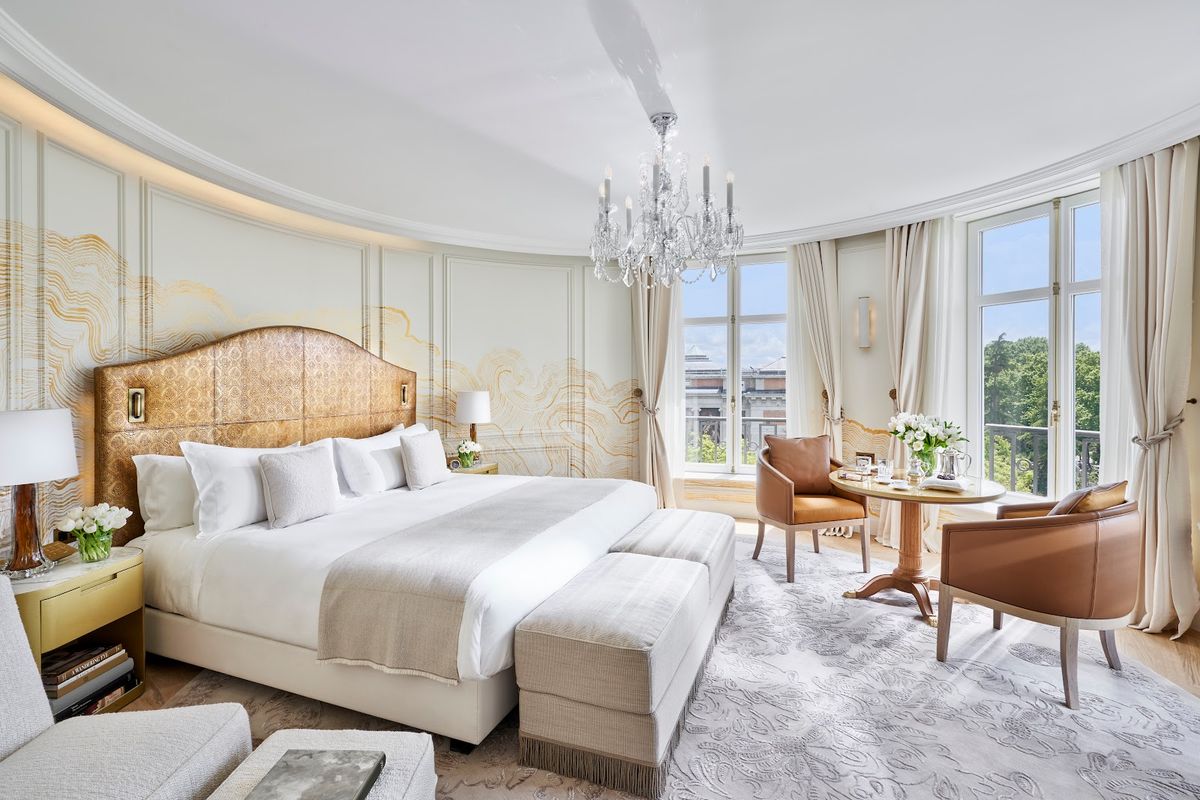
The restoration kept the Belle Époque shell — the white-stone façade, the original entrance hall, the ironwork of the central staircase, the 1910 stained-glass dome over the lobby — and entirely rebuilt the interiors behind it. The room count was reduced from 167 to 153 to give every category of room a proper proportion; corridors were widened; the original ballrooms and salons were brought back to use as restaurant, bar, and event spaces. The Mandarin Oriental design team — led by French architect Gilles & Boissier — produced what is, by general critical consensus, the most successful Belle Époque hotel restoration in Europe in the past decade. Every visible surface has been redrawn; every visible surface looks as though it has been there for a century.
The hotel's restaurant programme is its strongest single argument. Deessa, in the original 1910 dining room and led by Quique Dacosta, holds two Michelin stars and runs several multi-course tasting menus across Wednesday-to-Saturday lunch and dinner services. Palm Court, in the central glass-domed atrium that is the most photographed space in the hotel, runs all-day dining and the city's most discussed afternoon tea. Pictura runs the rooftop terrace dining; the Champagne Bar runs the late-night programme. There are five restaurants and bars in total, all overseen at the executive-chef level by Quique Dacosta. The spa — a 1,000-square-metre underground installation that was one of the most expensive elements of the restoration — includes the city's only proper hotel hammam, an indoor pool, and a treatment menu that draws on Mandarin Oriental's Asian heritage applied to Spanish ingredients.
Where it sits in the global field
The most direct comparisons in this top-50 are Cheval Blanc St-Tropez in St Tropez (#3), Mandarin Oriental Bangkok in Bangkok (#5), Aman New York in New York (#2). Mandarin Oriental Ritz, Madrid earns the higher rank for one or two specific reasons we cover in the verdict above. The other hotels are not lesser properties — on a different lens (occasion, region, hotel type) the order would shuffle. See our occasion-specific Top 50s for the alternative views.
Practical: getting in
Address: Pl. de la Lealtad, 5, Retiro, 28014 Madrid, Spain. World-list-tier hotels book three to nine months ahead, longer for the suite categories that book peer-pressure tight in peak season. The full review at the hotel page has current rates, the room categories worth paying up for, and any signature programmes worth booking pre-arrival. Use our Madrid city guide for what else to do while you’re there.