Aman Kyoto ranks #2 on our 2026 list of the best solo retreat hotels in the world. The case below explains why — the architecture, the bar, the suite ritual, and the alternatives we measured it against.
“Twenty-six suites and two villas across 32 acres of secret garden at the foot of Hidari Daimonji. The most secluded city Aman in the world — discovered through unmarked gates.”
The hotel itself
Twenty-six suites and pavilions across 80 acres of forest and gardens at the foot of Hidari Daimonji, in the Takagamine district north of central Kyoto. The most secluded city Aman in the world — discovered through unmarked gates.
"Twenty-six suites and two villas across 32 acres of secret garden at the foot of Hidari Daimonji. The most secluded city Aman in the world — discovered through unmarked gates."
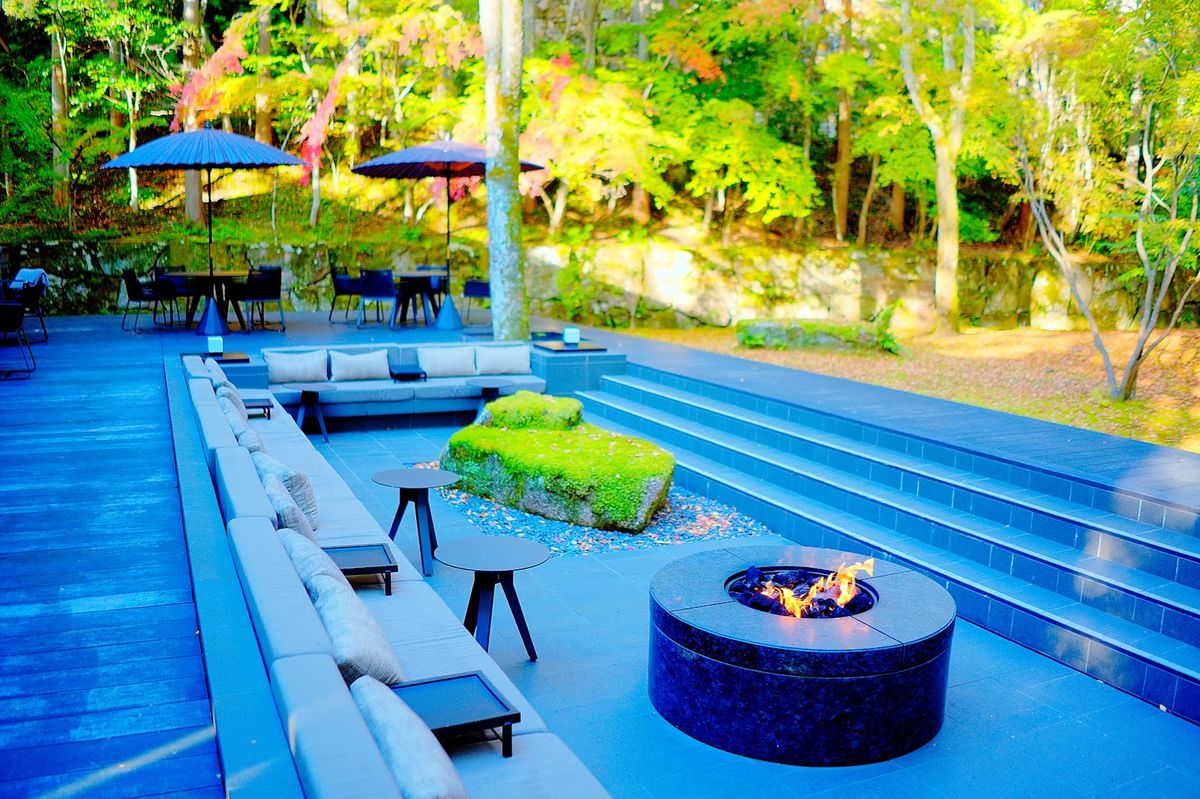
Aman Kyoto opened on 1 November 2019 on a 32-hectare (80-acre) parcel in the Takagamine foothills of northern Kyoto, at the foot of Hidari Daimonji — the western of the two mountains where the Gozan no Okuribi fires are lit each August during Obon. The site comprises 72 acres of permanent moss-and-cedar forest and 8 acres of formal Japanese gardens originally laid out for a kimono-merchant's collection of textiles and paintings that was never built; Aman acquired the abandoned site in 2014 and commissioned Australian architect Kerry Hill (Aman Tokyo, Aman Sveti Stefan, the Datai Langkawi) to design a hotel that would integrate the existing gardens, mountain spring, and forest pathways. Hill died in August 2018, and the hotel opened a year later as one of his final completed projects — the most architecturally considered urban resort in the Aman portfolio and, by every reading, the most considered hotel arrival in Kyoto in a generation.
Why it works for a solo trip
Solo travel to a creative city is structurally different from couples travel to the same city. The trip is built around looking — at architecture, at art, at the way the local people drink coffee in the morning. Properties that earn solo-list inclusion in Kyoto, Marrakech, Tokyo, Big Sur, Sedona are the ones where the architecture itself rewards being alone in it: the courtyard you can sit in for an hour, the room with the right desk, the bath you can disappear into for ninety minutes.
Aman is the luxury group most calibrated for solo travel. Founded in 1988 by Adrian Zecha and now owned by Russian-American developer Vladislav Doronin, Aman has built its identity around the deliberate solitude that other luxury groups treat as an exception. The architecture is restrained. Service is anticipatory but never theatrical. Suites are oversized — Aman has the largest standard rooms of any luxury brand at scale, which matters disproportionately when you are using one for a week alone. The brand is famous for the kind of multi-night stays where guests check in, do not check out, and lose track of what day it is. For a solo retreat the Aman case is structural: the property is built for the trip you are taking.
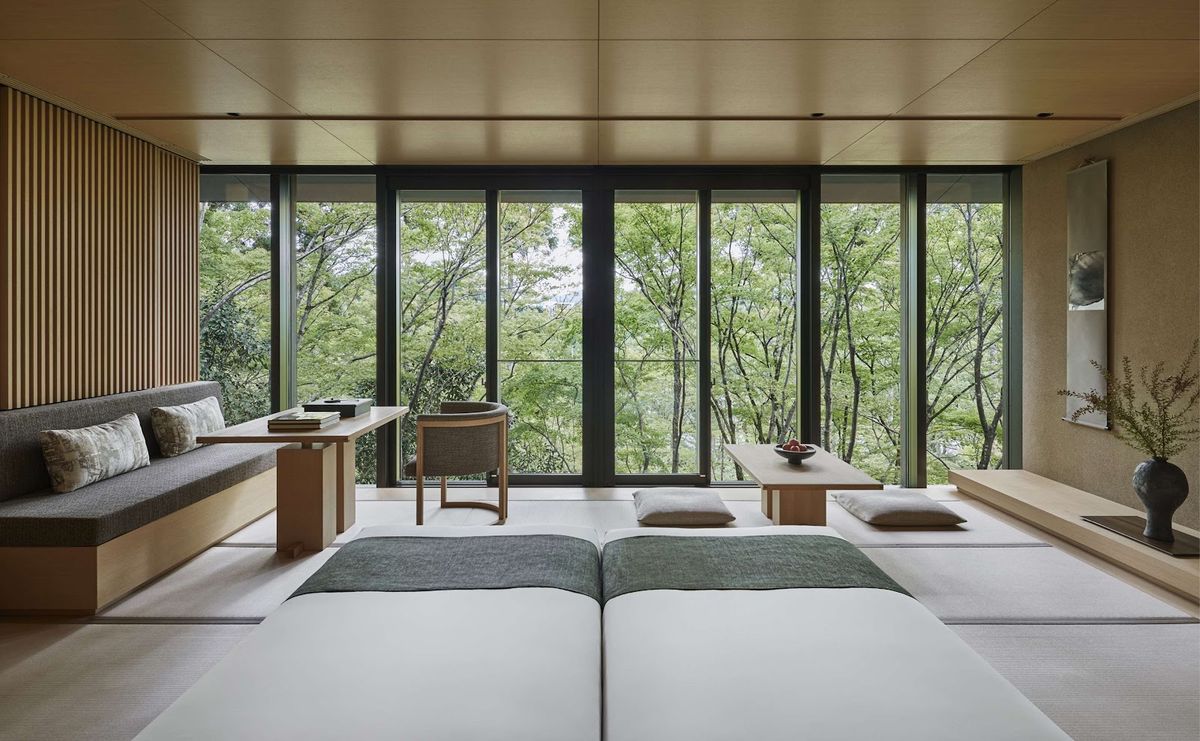
There are 24 guest rooms across four guest pavilions and two two-bedroom villas — 26 keys total. The pavilions, all single-storey blackened-cedar buildings set into the gardens at different elevations, are connected by stone paths and viewing platforms; each pavilion houses six guest rooms. The standard Suite runs to 70 square metres with a separate sitting area, a private terrace facing the forest, a deep stone soaking tub, and floor-to-ceiling windows facing the moss garden. The Takagamine Suite — the property's signature room — runs to 226 square metres with two bedrooms (one Western, one tatami), a private dining room with kitchen and wine cellar, and a private terrace overlooking the central pond. The two two-bedroom Villas — Heian and Hidari — are stand-alone buildings with their own gardens, private onsen, and two-bedroom configurations sized for multi-generational families. The interior register, by Hill, leans monastic-Japanese: hand-loomed beige textiles, charcoal-black timber floors, hand-shaped ceramics, and natural Hinoki cypress in every bathroom.
The Aman Kyoto Living Pavilion — the property's central public space — runs the breakfast-and-lunch programme with a working open kitchen and views over the central pond. The Taka-an restaurant, set into a separate sub-pavilion, runs the property's signature multi-course Japanese kaiseki dinner programme under a chef trained at the two-Michelin-starred Sojiki Nakahigashi. The Sushi Bar Nama, opened in 2022, runs the property's intimate omakase counter — 8 seats only. The Aman Spa, set into the property's own bathing pavilion, runs the property's onsen circuit drawn from a local spring (one of the only true urban onsen in Kyoto, reactivated by Aman from a long-dormant traditional spring) plus six treatment rooms with the brand's signature programme. The hot spring pools — separate male and female — are the property's quietest hour at sunset.
Where it ranks against rivals
For a 2026 solo trip at this level, the most direct comparisons are Aman New York in New York (#1 on this list), Amankora in Bhutan (#3 on this list), Aman Tokyo in Tokyo (#4 on this list). Aman Kyoto earns the higher rank for one or two specific reasons covered in the verdict above — usually a combination of architectural privacy, the bar that holds for one, and the staff continuity that makes a multi-night solo stay feel held rather than transactional. The other properties are not lesser hotels — in some cases the answer for your particular trip is the runner-up.
Practical: getting in
Address: 1 Okitayama Washimine-cho, 大北山鷲峯町 北区 京都市 京都府 603-8458, Japan. Solo-suited categories — the executive king with the working desk, the studio suite with the right bath, the small villa with private outdoor space — book three to six months ahead in shoulder season. Some of the smallest properties on this list (Rachamankha, Yufuin Tamanoyu, Belmond Phou Vao) book twelve months ahead. The full review at the hotel page has current rates and the room categories worth paying up for. Use the solo retreat occasion page for the broader context.