Rachamankha ranks #6 on our 2026 list of the best solo retreat hotels in the world. The case below explains why — the architecture, the bar, the suite ritual, and the alternatives we measured it against.
“In Old City — 25 suites in restored Lanna courtyard architecture.”
The hotel itself
A 25-room temple-vernacular boutique inside the Chiang Mai Old City moat — opened 2003, Relais & Châteaux since 2009 — modeled architecturally on the temple complexes of Lanna and steps from Wat Phra Singh.
"Architect Ong-ard Satrabhandhu's Lanna-temple-as-hotel concept. Twenty-five rooms inside the Old City moat, three minutes on foot from Wat Phra Singh. The most architecturally rigorous boutique in Northern Thailand and the only Relais & Châteaux inside the Chiang Mai walls."
Rachamankha opened on 1 January 2003 as the personal architectural project of Bangkok-trained Ong-ard Satrabhandhu — the Thai architect known for the Anantara Lawana Koh Samui and several restored Bangkok teak houses — who acquired the 0.5-hectare site inside the Chiang Mai Old City moat (specifically opposite Wat Phra Singh on Rachamankha Road) and designed a hotel architectural concept rooted in the regional Lanna-Buddhist temple complex. The building is arranged as a temple-style courtyard plan, with whitewashed brick walls, terracotta-tiled roofs, hand-carved teak doorways, and a deliberate decorative restraint that reads as continuous with the surrounding 14th-century Lanna temple architecture rather than as a contemporary hotel inside historical surroundings. The property was admitted to Relais & Châteaux in 2009 — the first Northern Thailand property to receive the designation.
Why it works for a solo trip
Solo travel to a creative city is structurally different from couples travel to the same city. The trip is built around looking — at architecture, at art, at the way the local people drink coffee in the morning. Properties that earn solo-list inclusion in Kyoto, Marrakech, Tokyo, Big Sur, Sedona are the ones where the architecture itself rewards being alone in it: the courtyard you can sit in for an hour, the room with the right desk, the bath you can disappear into for ninety minutes.
Aman is the luxury group most calibrated for solo travel. Founded in 1988 by Adrian Zecha and now owned by Russian-American developer Vladislav Doronin, Aman has built its identity around the deliberate solitude that other luxury groups treat as an exception. The architecture is restrained. Service is anticipatory but never theatrical. Suites are oversized — Aman has the largest standard rooms of any luxury brand at scale, which matters disproportionately when you are using one for a week alone. The brand is famous for the kind of multi-night stays where guests check in, do not check out, and lose track of what day it is. For a solo retreat the Aman case is structural: the property is built for the trip you are taking.
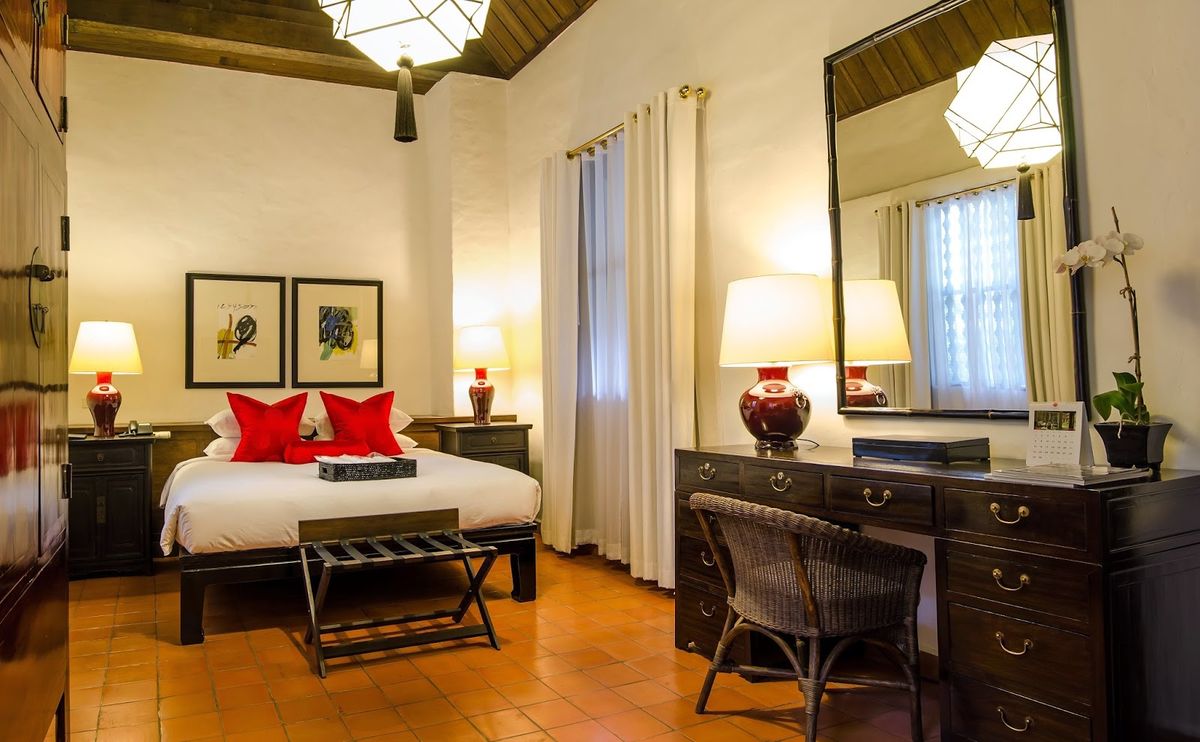
The 25 rooms — including 4 suites — are arranged across three garden-courtyard wings within the property's compound. Standard categories at 28 square metres include the Lanna-vernacular interior decoration (whitewashed walls, hand-loomed silk textiles, restored Lanna antique decoration); Premier categories at 38 sqm add a private terrace; the Rachamankha Suite at 65 sqm is the milestone unit, with a four-poster bed, a private outdoor bathing platform, and Lanna-period antique programming. Bathrooms are travertine and brass; bath products are Lanna-Thann botanicals.
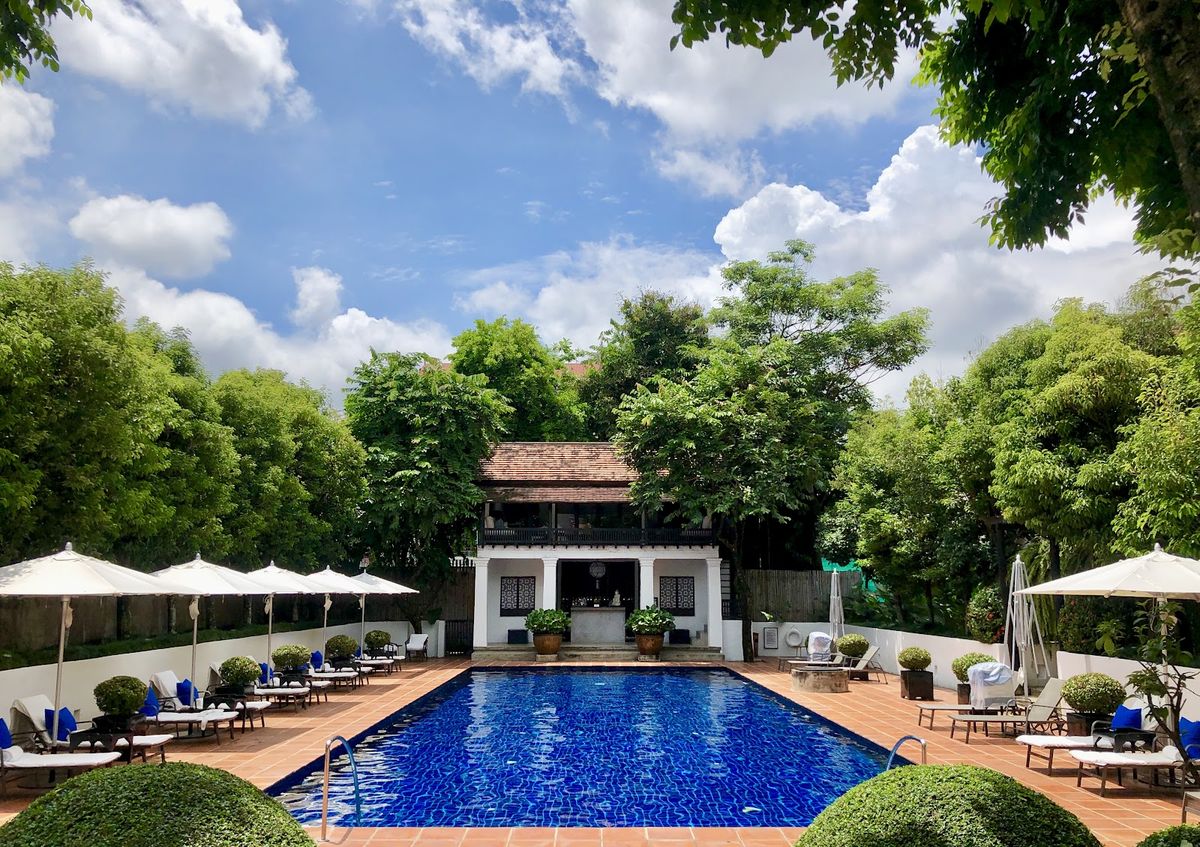
The Rachamankha Restaurant — a contemporary Lanna-and-Yunnan register opened with the hotel — runs the property's principal dining programme; the kitchen has been a Chiang Mai destination since opening. The Rachamankha Library — a 4,000-volume collection on Lanna and South-East-Asian art and architecture, curated by Satrabhandhu personally — is the property's signature interior space and is open to all guests for reading. The Rachamankha Bar handles the cocktail and aperitivo programme on the main courtyard. The 12-metre central pool sits in the principal courtyard surrounded by frangipani and bodhi trees. There is no spa other than a small treatment menu by appointment in-suite.
Where it ranks against rivals
For a 2026 solo trip at this level, the most direct comparisons are The Connaught in London (#5 on this list), Amanjena in Marrakech (#7 on this list), Aman Tokyo in Tokyo (#4 on this list). Rachamankha earns the higher rank for one or two specific reasons covered in the verdict above — usually a combination of architectural privacy, the bar that holds for one, and the staff continuity that makes a multi-night solo stay feel held rather than transactional. The other properties are not lesser hotels — in some cases the answer for your particular trip is the runner-up.
Practical: getting in
Address: 6 Soi Ratchamanka 9, Tambon Si Phum, Amphoe Mueang Chiang Mai, Chang Wat Chiang Mai 50200, Thailand. Solo-suited categories — the executive king with the working desk, the studio suite with the right bath, the small villa with private outdoor space — book three to six months ahead in shoulder season. Some of the smallest properties on this list (Rachamankha, Yufuin Tamanoyu, Belmond Phou Vao) book twelve months ahead. The full review at the hotel page has current rates and the room categories worth paying up for. Use the solo retreat occasion page for the broader context.