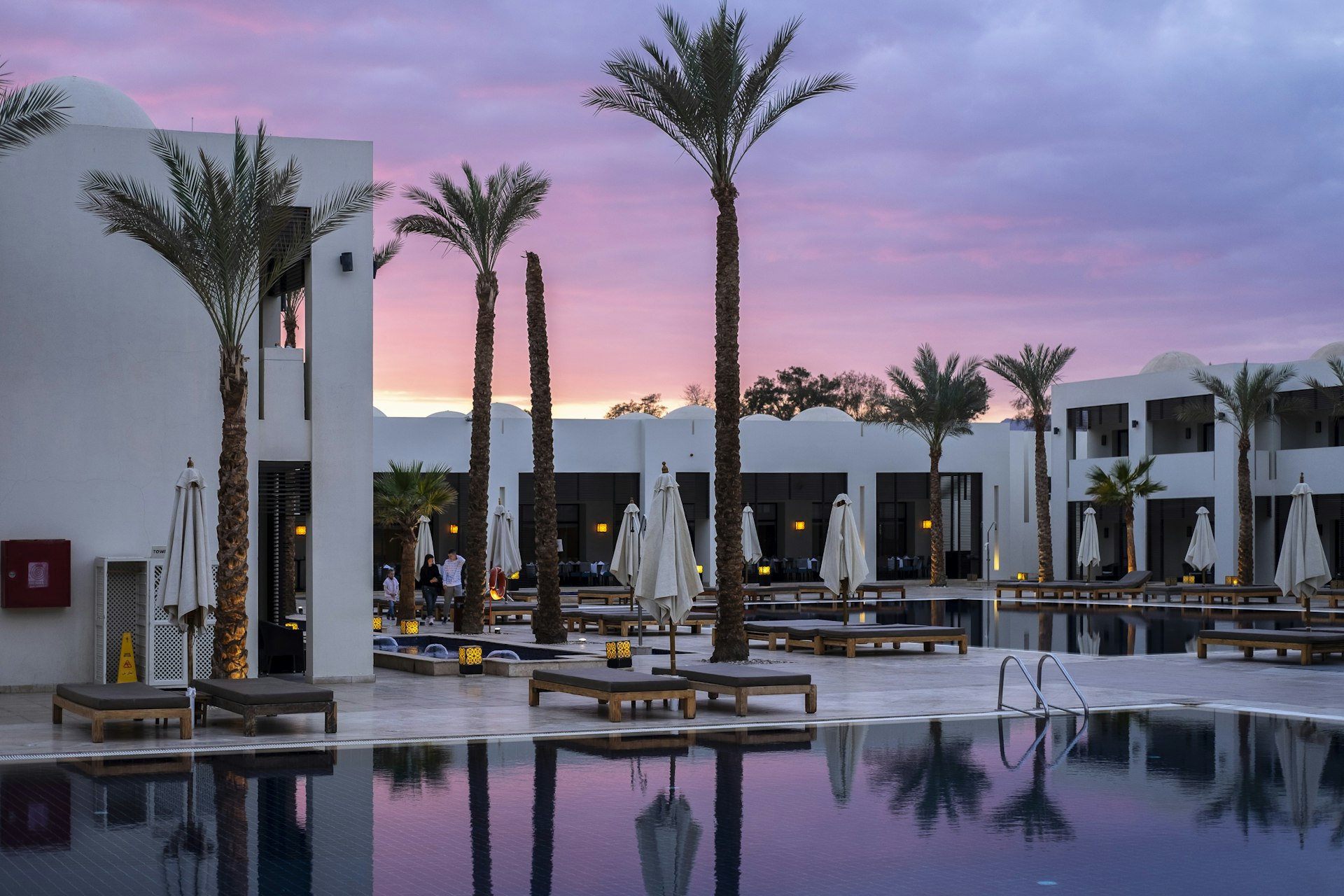
Boutique means small enough to feel personal and distinctive enough to feel like nowhere else. These are the hotels where design, character and service matter more than the number of rooms.
For the best boutique hotel overall, book Le Sirenuse on the Amalfi Coast, a family-run icon of taste and warmth. For a Parisian hideaway, Hotel Particulier Montmartre. For Scandinavian calm, Ett Hem in Stockholm. For Asian craft, The Siam in Bangkok. Each trades scale for genuine character.
| Hotel | Best for | Price tier | HFK score |
|---|---|---|---|
| Hotel Particulier Montmartre | A Paris hideaway | $$$ | 9.1 |
| Saint James Paris | A chateau in the city | $$$$ | 9.2 |
| Ett Hem | Scandinavian residential calm | $$$$ | 9.2 |
| Nimb Hotel | A Moorish landmark in the city | $$$$ | 9.0 |
| Le Sirenuse | The benchmark family-run icon | $$$$ | 9.3 |
| JK Place Capri | Capri style at a small scale | $$$$ | 9.2 |
| Portrait Firenze | Riverfront Florence with style | $$$$ | 9.1 |
| Mercer Sevilla | A restored palace in the old town | $$$ | 9.0 |
| Cotton House Barcelona | Architectural character in the city | $$$ | 8.9 |
| The Siam | Art-deco craft in Bangkok | $$$$ | 9.2 |
| Capella Hanoi | Theatrical design in Hanoi | $$$$ | 9.2 |
| The Greenwich Hotel | Downtown New York discretion | $$$$ | 9.1 |
Price tiers reflect typical low-season positioning: $$ upper-mid, $$$ premium, $$$$ ultra-luxury. Rates move sharply by season; confirm live pricing before booking.
A boutique hotel is small in scale, usually under a hundred rooms and often far fewer, with a strong individual design identity and service that feels personal rather than processed. The best are independent or run by a tight-knit team, with a point of view you can feel in every room. They prize character, craft and atmosphere over the uniform polish of a big-brand five-star.
Size alone does not make a hotel boutique, and the word is widely overused. We look for genuine individuality: a distinctive design hand, a sense of place, and service that knows your name by the second day. We weight design and character most heavily, then service, because a small hotel without a point of view is just a small hotel. We are honest about where charm comes at the cost of facilities like a full spa or pool.
Every property on this page is scored from 0 to 10 against five weighted criteria, then combined into a single HFK score. The weighting is fixed for this category so the numbers are comparable across hotels:
Scores are our independent editorial assessment, not guest review averages. See our full methodology.
Why it makes the list. A five-suite mansion hidden behind a private garden in Montmartre, more friend's elegant home than hotel, with individually designed rooms and total discretion.
What to book. A garden-facing suite; the secluded courtyard bar is one of the most romantic spots in Paris.
Honest con. With only five rooms and no spa or restaurant beyond the bar, facilities are minimal. The Montmartre hillside means steps and a climb.
Why it makes the list. The only chateau-hotel in central Paris, set in its own walled garden, with theatrical Laura Gonzalez interiors, a library bar and a sense of private-club seclusion.
What to book. A garden-view room; the library bar and the hidden garden are the signatures.
Honest con. The 16th is residential and quiet, away from the central sights. The maximalist design is bold rather than restful.
Why it makes the list. A converted Arts-and-Crafts townhouse run like a private home, where guests help themselves in the kitchen and design by Ilse Crawford sets the benchmark for warm Scandinavian minimalism.
What to book. A room overlooking the conservatory garden; the open kitchen and honesty larder are the heart of it.
Honest con. Small, with no traditional restaurant or bar scene, and Stockholm's location suits a city break rather than a sun trip. Premium rates for the size.
Why it makes the list. A 38-room hotel inside a Moorish-revival palace overlooking the Tivoli Gardens, with characterful rooms, fireplaces and several excellent restaurants downstairs.
What to book. A room facing Tivoli; the rooftop pool and the in-house dining are the draw.
Honest con. The Tivoli setting brings crowds and amusement-park sound in season. The fairy-tale architecture is charming but particular.
Why it makes the list. A former family villa above Positano, run by the Sersale family since 1951, with red-and-white style, a Michelin-starred restaurant and a warmth no large hotel can replicate.
What to book. A sea-view room with a terrace facing the dome of Santa Maria Assunta; the Franco's Bar at sunset is essential.
Honest con. Positano means steep steps everywhere and summer crowds. The intimate scale means the best rooms book a year ahead.
Why it makes the list. A 22-room jewel above Marina Grande with impeccable Michele Bonan interiors, a yacht-club mood and the most stylish small-hotel service on the island.
What to book. A sea-view room; the JKitchen terrace and the beach-club shuttle are the highlights.
Honest con. It sits by the port rather than in Capri town, so the famous Piazzetta is a funicular ride away. Very high season rates.
Why it makes the list. A Ferragamo-owned suite hotel on the Arno steps from the Ponte Vecchio, with residential design, a personal lifestyle-manager service and the best riverfront position in the city.
What to book. An Arno-view suite; the rooftop and the tailored city itineraries are the draw.
Honest con. Suite-only and small, with no pool, so it is a city base rather than a resort. The central location brings tourist bustle below.
Why it makes the list. A 19th-century palace in Seville's Santa Cruz quarter restored into a 12-room boutique, with a sleek courtyard, a rooftop plunge pool and a calm old-town location.
What to book. A suite over the courtyard; the rooftop terrace is the place for an evening drink.
Honest con. Small and without a full spa, and Seville's summer heat is intense. The old-town lanes are atmospheric but tight for cars.
Why it makes the list. A former cotton-makers' guild building turned hotel, with a sweeping spiral staircase, a library bar and a rooftop pool, full of architectural character on the Eixample.
What to book. A room with the restored period detailing; the rooftop and the old guild library are the signatures.
Honest con. On a busy avenue rather than a quiet lane, and the pool is small. Some rooms are more compact than the grand public spaces suggest.
Why it makes the list. A riverside art-deco retreat designed by Bill Bensley, full of antiques and Thai craft, with pool villas, a Muay Thai ring and a personal, residential feel rare in Bangkok.
What to book. A riverfront pool villa; the antique-filled public spaces and the river shuttle are the draw.
Honest con. Set north of the center, so the main sights and shopping need the river boat or a drive. The dense, layered design is not for minimalists.
Why it makes the list. A Bill Bensley fantasy themed around an early-20th-century opera house, near Hanoi's Opera House, with lavish, story-driven rooms and a jewel-box scale.
What to book. An opera-themed suite; the design and the spa are the headline experience.
Honest con. The maximalist theming is divisive and very particular. Central Hanoi is busy and loud just outside the doors.
Why it makes the list. Robert De Niro's Tribeca hotel, where no two rooms are alike, with a lantern-lit underground pool, the Locanda Verde restaurant and a discreet, residential downtown mood.
What to book. A courtyard-facing room; the Shibui Spa pool and Locanda Verde are the signatures.
Honest con. Tribeca is quiet at night compared with Midtown, and the discreet entrance is easy to miss. Downtown luxury rates are steep.
With a dozen rooms or fewer at most of these houses, the difference between a fine stay and a great one is the specific room you reserve. Ask for the named rooms our editors flag above, book direct so the hotel owns your preferences from arrival, and request the things small hotels do best: an early check-in held, a quiet room confirmed, a dinner table reserved before you land.
Concierge tip: in a hotel this small, the front desk and the owner are often the same circle. A short note a week ahead with one genuine request travels further than any loyalty tier.
A boutique hotel is small in scale, usually under a hundred rooms and often far fewer, with a strong individual design identity and personal service. The defining qualities are character and a sense of place rather than size alone. The best boutique hotels are independent or run by a close team, with a distinctive aesthetic and staff who know guests by name, which large brand hotels rarely match.
Le Sirenuse on the Amalfi Coast is our top boutique hotel overall, a family-run Positano icon that combines unmistakable style, a Michelin-starred restaurant and genuine warmth. For a Parisian hideaway, Hotel Particulier Montmartre; for Scandinavian calm, Ett Hem in Stockholm; for Asian craft, The Siam in Bangkok. The best choice depends on the city and the mood you want.
Not always, but the best boutique hotels often charge premium rates because their small scale, personal service and design pedigree carry a cost per room that large hotels spread across hundreds of keys. You typically pay for character and intimacy rather than facilities. Some, like Mercer Sevilla and Cotton House Barcelona, offer strong value, while flagship icons sit at full luxury pricing.
Some do and many do not, which is the main trade-off. Smaller properties like Hotel Particulier Montmartre and Portrait Firenze prioritise character over facilities and may have no pool or full spa. Larger boutiques such as Nimb, The Siam and The Greenwich Hotel do offer pools and spas. If facilities matter, check each property, since intimacy often comes at the cost of amenities.
Yes, boutique hotels are often ideal for couples, since their intimate scale, design character and personal service create a romantic, distinctive stay. Properties like Hotel Particulier Montmartre, Le Sirenuse and JK Place Capri are particularly suited to couples. Families may find the smaller, design-focused boutiques less practical than larger resorts with kids' facilities and family rooms.
The terms overlap heavily. Boutique emphasises small scale and personal service, while design hotel emphasises a strong architectural or interior concept, which may apply to larger properties too. Many hotels are both. A design hotel can have hundreds of rooms, whereas a boutique hotel is defined partly by being small. See our design hotels guide for the design-led end of the spectrum.
Book well ahead, often three to six months and up to a year for the smallest icons in peak season. Because boutique hotels have so few rooms, the best ones sell out faster than large hotels, and the standout rooms, such as sea-view terraces at Le Sirenuse, go first. For popular cities and Mediterranean summers, early booking is essential to secure the room you want.
Curated by hand. Verified against current property information. Independent.
Weekly: hotel reviews, destination guides, and occasion recommendations.