The Hotel
Gangtey Lodge sits on a hillside at 3,000 metres above the Phobjikha Valley in central Bhutan — a glacial U-shaped valley protected as one of the kingdom's most environmentally sensitive zones because of its winter role as the wintering ground for the endangered black-necked crane (Grus nigricollis). Roughly 350 of the world's 11,000 black-necked cranes spend the winter (late October through late February) in Phobjikha, arriving from Tibet in formation and dispersed across the wetland floor for four months. The Gangtey Goempa monastery on the opposite ridge holds the kingdom's only Pema Lingpa lineage Nyingma seat. The valley has no electricity grid as a deliberate conservation policy — power runs from the lodge's solar-and-generator combination — and the valley's tourism cap permits roughly 1,000 international visitors per winter season.
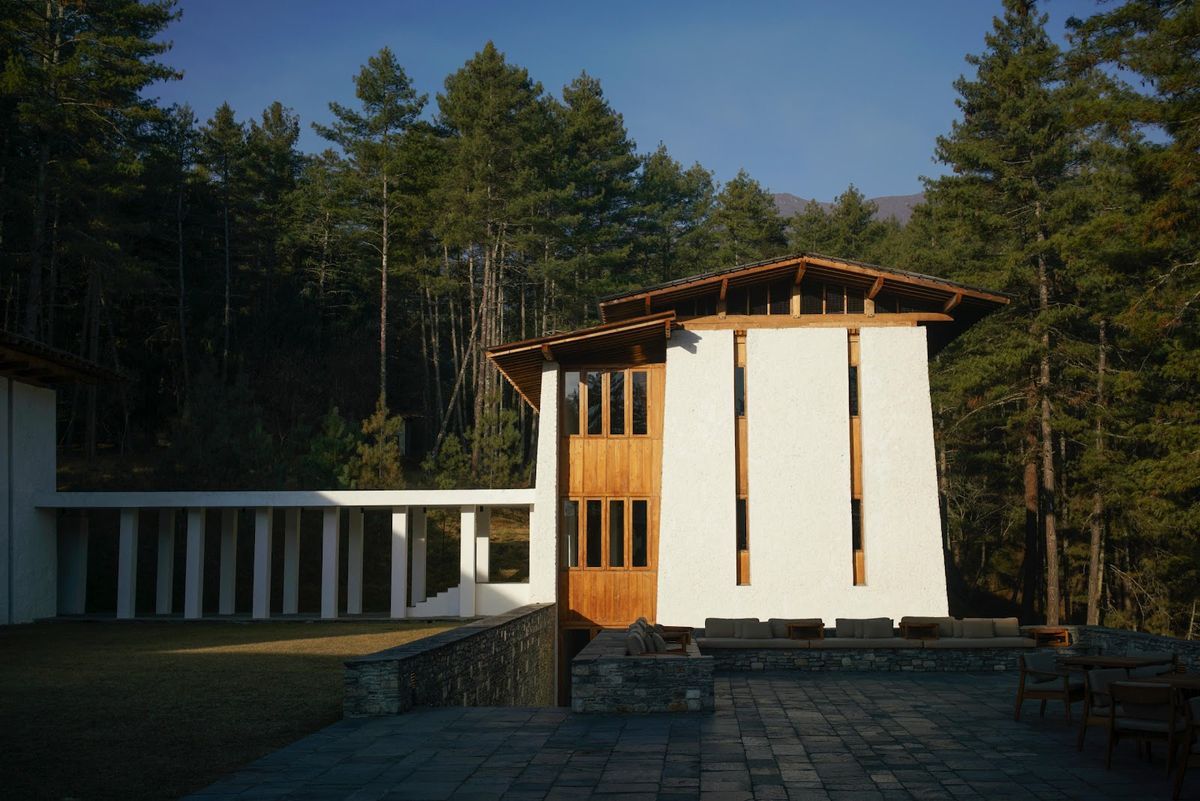
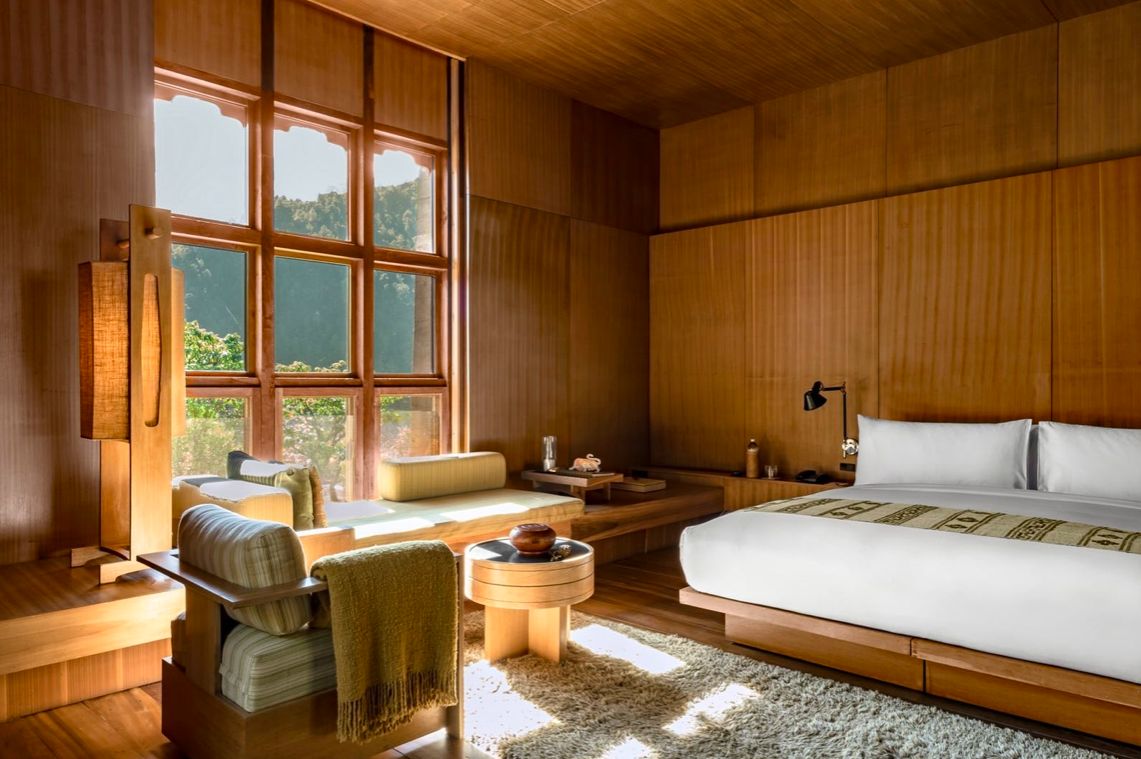
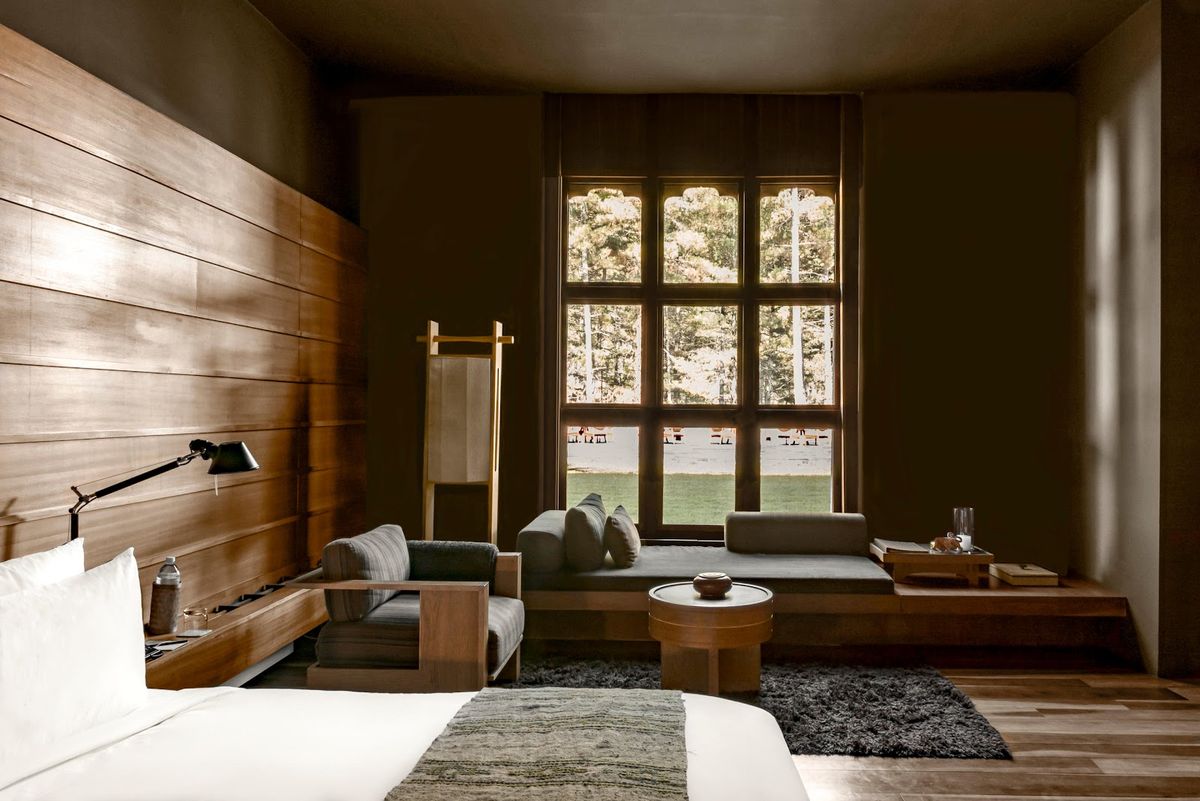
The lodge was opened in 2014 by NZ-based Pankhurst Estates (a private investment family with hospitality holdings in New Zealand and southeast Asia) and remains the only luxury operator on the valley rim — the other valley operators (Dewachen Resort, Phobjikha Lodge) sit at a tier below. The architectural register is the Bhutanese farmhouse vocabulary in extended scale: rammed earth walls, hand-painted timber lintels, slate roofs, and the dzong-style window detailing applied to twelve suites that all face the valley floor. Suites run a uniform 65-sqm footprint with a wood-burning bukhari stove (the Bhutanese cast-iron heater that heats the rooms through the high-altitude winter), a private bathtub, and floor-to-ceiling glass on the valley elevation.
Operationally the lodge is structured around the seasonal pulse of the valley — dawn crane-watching from the suite balcony or from a guided morning hide is the November-February daily centrepiece; in the green-valley April-October window the focus moves to high-altitude trekking, the Gangtey Goempa monastery walk-and-meditation programme, and the Royal Botanical Park horticulture (the valley holds 13 species of rhododendron, blooming in April-May). The lodge runs an in-house spa with two treatment rooms, a hot stone bath programme that uses traditional Bhutanese mineral-stone heating, and a daily yoga session on the valley-facing pavilion.
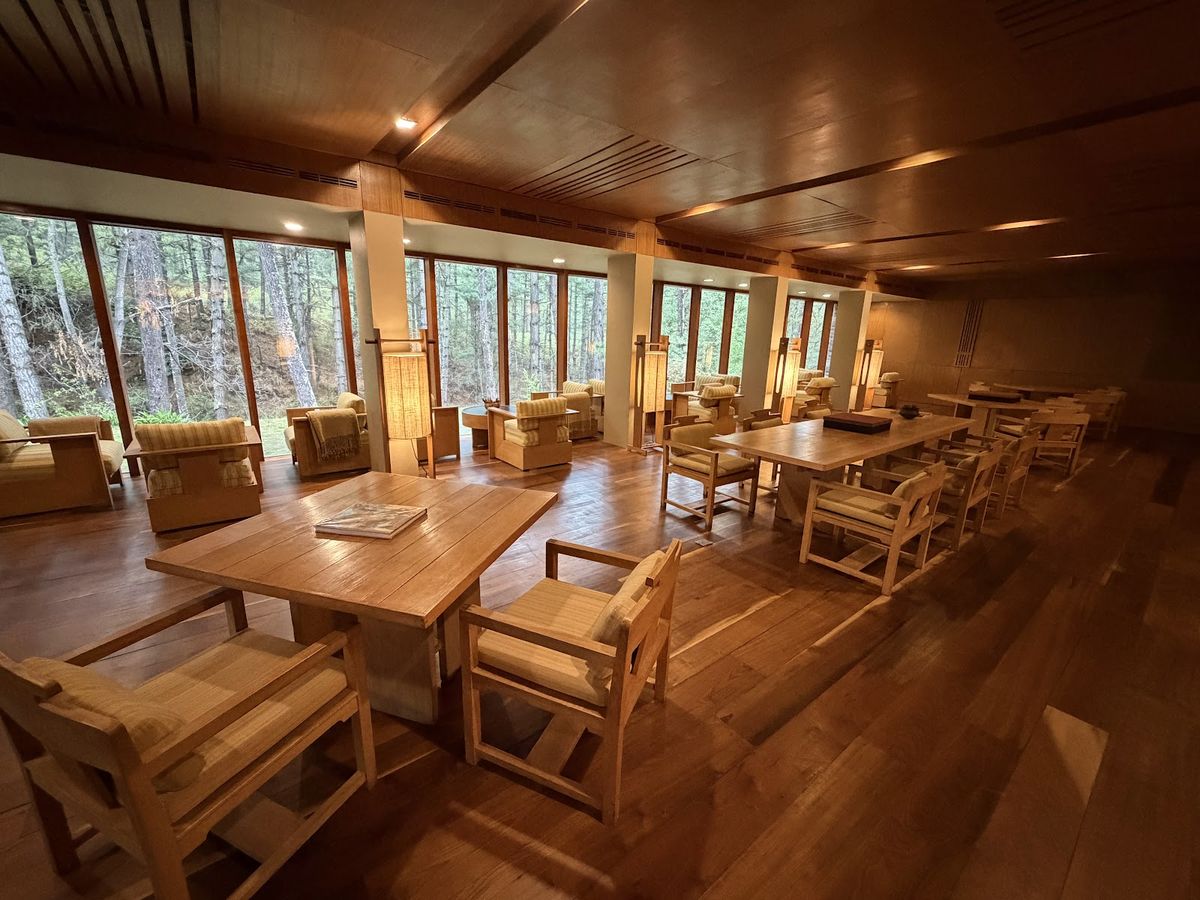
Dining is three meals a day in the main lodge, included in the all-inclusive rate as is standard in Bhutan luxury (the country's tourism policy effectively mandates all-inclusive Sustainable Development Fee structures). The kitchen runs the Bhutanese-Asian register the kingdom's luxury hotels have standardised — ema datshi (the chilli-and-cheese national dish, on the menu in a calibrated form), buckwheat pancake breakfast, and a vegetarian-forward register through dinner. The lodge's wine cellar — extraordinary for a Bhutanese property — runs about 60 bins focused on European-vintage reds. For a wellness retreat that takes the high-altitude valley's Buddhist-monastic register as the trip's core, a solo writer's retreat that genuinely cannot be reached by phone, or a milestone-anniversary multi-lodge Bhutan circuit (typically Gangtey paired with Punakha and Paro), Gangtey Lodge is the considered choice.
Best Occasion Fit
Wellness Retreat
Gangtey Lodge runs the kingdom's most-developed valley-rim wellness programme — daily yoga on the valley pavilion, Bhutanese hot-stone bath programme using traditional mineral-stone heating, and a structured five- or seven-night meditation-and-monastery walking retreat that runs alongside the regular lodge programme during the November-February crane season. Solo travellers receive a dedicated host for the duration of the stay.
Solo Retreat
For a writer or reader who wants the Phobjikha Valley as the register of the trip — and who values being genuinely off-grid for the duration of the stay — Gangtey is one of the few luxury options on the planet that delivers both. The lodge runs no televisions and unreliable wifi by design; the Gangtey Goempa monastery walk is a daily anchor; the dawn-crane balcony watch from November-February is the structural reason most solo guests come.
Practical Information
Address
Gangtey, Phobjikha Valley
Wangdue Phodrang
Bhutan
Gangtey ridge above Phobjikha Valley at 3,000m altitude; 5-hour drive from Paro International Airport
Rooms & Rates
12 valley-facing suites (uniform 65 sqm)
Wood-burning bukhari stove in every suite
Private bathtub and rainfall shower
Floor-to-ceiling valley-elevation glass
From USD 1,650/night all-inclusive (per suite)
Plus mandatory Bhutan SDF USD 100/person/night
Check-in / Check-out
Check-in: after the Wangdue-Phobjikha drive
Check-out: 11:00 AM
Pankhurst Estates ownership; opened 2014
5 hr drive from Paro; 3 hr from Punakha
Key Features
Only luxury lodge on Phobjikha Valley rim
Black-necked crane viewing November-February
Solar-and-generator power (no grid in valley)
Spa with Bhutanese hot-stone bath programme
Daily valley-pavilion yoga
Gangtey Goempa monastery walk-and-meditation
Wifi at main lodge only
Book Gangtey Lodge
From USD 1,650/night per suite all-inclusive (3-meal-a-day, valley excursions, monastery walks); plus Bhutan's mandatory Sustainable Development Fee at USD 100 per person per night. The black-necked crane season (November-February) books eight to twelve months ahead — the valley's tourism cap of around 1,000 winter international visitors makes lead time non-negotiable. Green-season (April-October) bookings need three to four months.
Book This Hotel →
Also Great in Bhutan