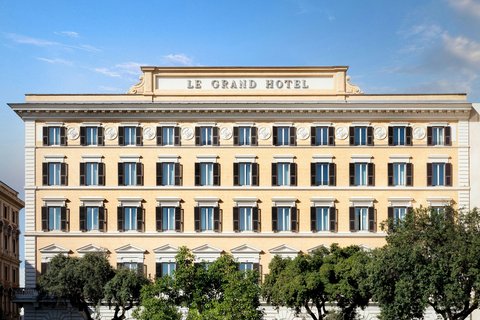
#7 in Best Luxury Hotels in Rome 2026 · ★★★★★
The St. Regis Rome
Via Vittorio Emanuele Orlando, near Repubblica · from EUR 750/night
Via Vittorio Emanuele Orlando, near Repubblica · from EUR 750/night
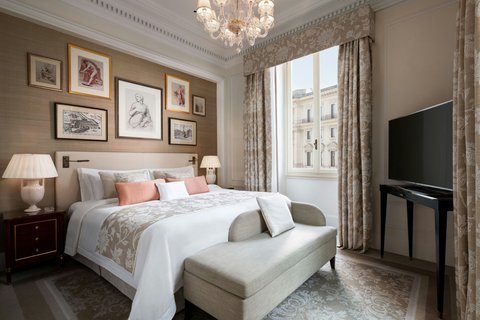
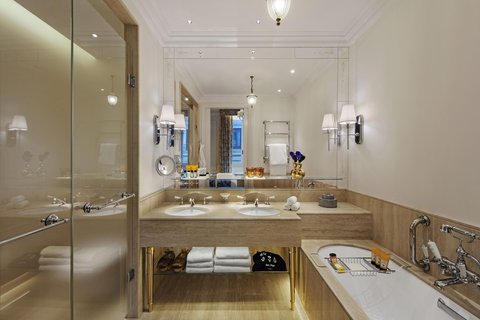
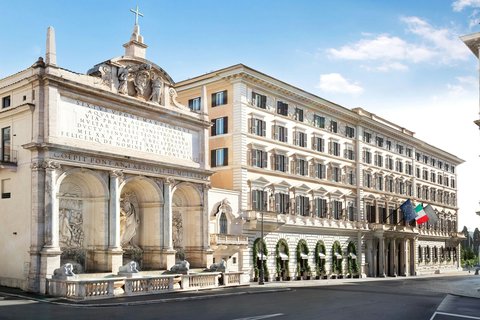
The St. Regis Rome opened in 1894 as Rome's first grand hotel with electricity and reopened in December 2018 after a roughly 40 million euro restoration. The 161 rooms and suites all come with signature St. Regis butler service. Lumen handles dining, and the setting near Piazza della Repubblica leans grand and formal.
"Cesar Ritz's 1894 grand hotel, restored by Pierre-Yves Rochon in 2018, with signature St. Regis butler service across 161 rooms."
Aggregate 9.3/10 on our editorial scale (Room & Design, Service, Location). Independently scored; see our methodology. This is our opinion, not an aggregate of user reviews.
Affiliate disclosure: we may earn a commission from bookings at no cost to you. We never accept payment for placement. Facts verified against official sources and the 2026 Michelin Guide in July 2026.
The St. Regis Rome combines deep history with full butler service, a rare pairing in the city. Cesar Ritz founded the hotel in 1894 as Rome's first grand hotel with electricity, and that grand-hotel lineage still defines the property. A roughly 40 million euro restoration by designer Pierre-Yves Rochon completed in December 2018, reworking the rooms in powder-blue and terracotta palettes drawn from Roman tradition while preserving the historic ballroom and facade. The signature St. Regis butler is available to every one of the 161 rooms and suites, so each guest gets that level of service regardless of category. Dining centres on Lumen, Cocktails & Cuisine, an all-day contemporary Italian restaurant and cocktail bar with the open-air Lumen Garden, known for an evening champagne sabering ceremony and afternoon tea. Signature suites include the Bottega Veneta Suite and the Royal Suite. The setting near Piazza della Repubblica is central and well connected for both business and leisure, though it reads as grand and formal rather than intimate or boutique, which shapes who the hotel suits best.
Every room at The St. Regis Rome comes with butler service, so the main booking decision is category and setting rather than a core amenity. The hotel holds 161 keys, split into 138 rooms and 23 suites, all reworked in the 2018 Pierre-Yves Rochon restoration with powder-blue and terracotta Roman palettes. Entry rooms already deliver the butler, the restored interiors, and the central location, which covers what most guests come for. Suites step up in space and grandeur, and the signature options include the Bottega Veneta Suite and the Royal Suite for travellers who want a landmark stay or need to entertain. Rates run from roughly EUR 700 to 1,000, positioning the hotel below the priciest Rome newcomers while offering a full grand-hotel package. The honest note is tone, since the rooms and the property overall feel formal and classic rather than boutique, so guests who prefer a more casual, contemporary room should weigh that. For events and business stays, the scale and service are strengths.
Dining at The St. Regis Rome centres on Lumen, Cocktails & Cuisine, an all-day venue rather than a starred flagship. Lumen serves contemporary Italian food and works as a cocktail bar, with the open-air Lumen Garden extending the space in warm weather. The room is known for two set pieces, an evening champagne sabering ceremony and a traditional afternoon tea, both of which lean into the hotel's grand-hotel character. This is a place for a polished cocktail, a leisurely tea, or a contemporary Italian dinner in formal surroundings rather than an adventurous tasting-menu destination. Lumen is not Michelin-starred, so guests chasing a starred meal will book elsewhere in the city, though the central location makes that easy. The strength here is the ceremony and setting, since the sabering ritual and the garden give the dining a sense of occasion that fits the property. For guests who want reliable all-day food and drink without leaving the hotel, Lumen and its garden cover the day.
The St. Regis Rome sits at Via Vittorio Emanuele Orlando 3, near Piazza della Repubblica, a central and well-connected part of the city. Piazza della Repubblica and the Baths of Diocletian are about a 5 minute walk, and Termini, Rome's main rail station, is roughly 10 minutes on foot, which makes the hotel easy to reach and a practical base for onward travel. Fiumicino airport is 35 to 45 minutes away by car. The honest trade-off is character, since the Repubblica setting is grander and more institutional than charming, and it sits a little farther from the Spanish Steps and Piazza del Popolo than some rivals. Guests who picture stepping out into a picturesque lane will find the immediate area more monumental than quaint. What the location does offer is connectivity, proximity to transport, and an easy position for both business and leisure. Travellers who value transit access and central reach over a storybook street will be well placed here.
Guests consistently praise the service and the sense of occasion at The St. Regis Rome. The butler available to every room draws repeated mention, as does the polish of the restored interiors after the 2018 Pierre-Yves Rochon work. The champagne sabering ceremony, afternoon tea, and the Lumen Garden feature in positive feedback as touches that set the stay apart. Many note how central and well connected the location is, particularly the short walk to Termini for onward travel. The recurring criticism concerns tone and setting, since some guests find the property formal and corporate rather than intimate, a natural result of 161 keys and a grand-hotel format, and others note the Repubblica surroundings feel grander than charming and a step removed from the Spanish Steps. On balance, travellers who want classic grand-hotel service and a connected base report strong stays, while those seeking a small, contemporary, boutique feel are the ones most likely to find it too formal.
Skip The St. Regis Rome if you want an intimate boutique feel or a picturesque street outside the door. At 161 keys with a grand-hotel format, the property reads as formal and a little corporate, which will not suit travellers seeking something small and contemporary. The setting near Piazza della Repubblica is grand rather than charming, and it sits farther from the Spanish Steps and Piazza del Popolo than several rivals, so guests who want to walk out into a storybook quarter may prefer another neighbourhood. There is no notable swimming pool, only a fitness centre and treatments, so pool-focused guests should look elsewhere. Rates run from roughly EUR 700 to 1,000, fair for the grand-hotel package but a real spend. Choose it for butler service, historic grandeur, events, and easy transport access near Termini. Travellers prioritising a pool, a quaint setting, or a boutique scale are the ones best served by a different property.
Yes. The signature St. Regis butler is available to every one of the 161 rooms and suites, regardless of category. This means entry-level rooms receive the same core service as the suites, which is a defining feature of the hotel.
Cesar Ritz founded the hotel in 1894 as Rome's first grand hotel with electricity. It completed a roughly 40 million euro restoration by Pierre-Yves Rochon and reopened in December 2018, which reworked the rooms while preserving the historic ballroom and facade.
The hotel sits at Via Vittorio Emanuele Orlando 3, near Piazza della Repubblica. Piazza della Repubblica and the Baths of Diocletian are about 5 minutes on foot, and Termini station is roughly 10 minutes. Fiumicino airport is 35 to 45 minutes by car.
No. Dining centres on Lumen, Cocktails & Cuisine, an all-day contemporary Italian restaurant and cocktail bar with the open-air Lumen Garden. It is known for an evening champagne sabering ceremony and afternoon tea, but it does not hold a Michelin star.
No. The hotel offers a fitness centre and treatments but no notable swimming pool. Guests who want to swim should note this before booking, since wellness here focuses on fitness and treatments rather than a pool or full spa circuit.
Off peak pricing, suite upgrades, and subscriber only offers, flagged only when the value is real.