#13 in Best Luxury Hotels in Rome 2026 · ★★★★★
W Rome
Via Liguria, off Via Veneto · from EUR 350/night
Via Liguria, off Via Veneto · from EUR 350/night
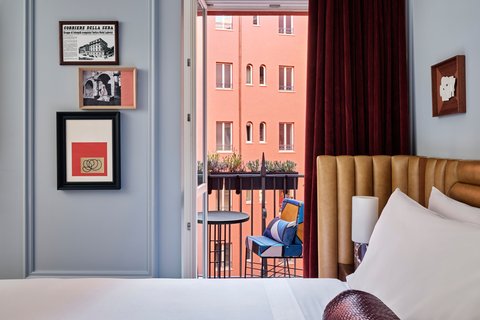
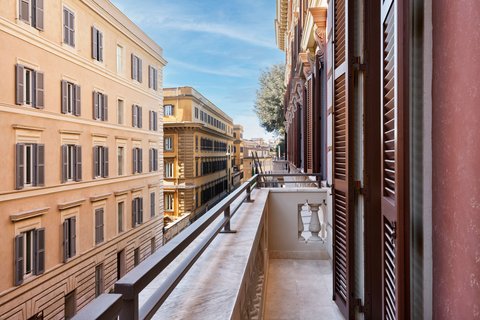
W Rome is W Hotels' first Italian property, occupying two connected early-20th-century palazzi in the Ludovisi area near Via Veneto and the Spanish Steps. It suits younger, design-driven travellers who want social energy, rooftop cocktails and a bold contemporary look, with 148 rooms and suites and a central, walkable address.
"W Hotels' bold Italian debut: 148 design-driven rooms across two palazzi near Via Veneto, with a rooftop bar and a lively social scene."
Aggregate 9.1/10 on our editorial scale (Room & Design, Service, Location). Independently scored; see our methodology. This is our opinion, not an aggregate of user reviews.
Affiliate disclosure: we may earn a commission from bookings at no cost to you. We never accept payment for placement. Facts verified against official sources and the 2026 Michelin Guide in July 2026.
W Rome is the W Hotels brand's debut in Italy, and that identity shapes everything about the stay. The hotel occupies two connected early-20th-century palazzi that have been given a bold, colour-forward contemporary redesign, so the historic shells hold interiors built for social energy rather than quiet tradition. The location in the Ludovisi district places it a short walk from Via Veneto, the street that defined Rome's dolce vita era, and within roughly ten minutes of the Spanish Steps. The property leans into nightlife and design in a way most central Rome five-stars do not. The W Lounge and Giardino Clandestino host aperitivo and social evenings, the Citrico Rooftop serves pizza and cocktails, and the overall mood targets a younger luxury traveller who wants the scene as much as the sleep. Rates typically run from about EUR 300 to 500, though they vary widely by season. This focus is also the honest catch. Guests who want a hushed, classical Roman hotel may find the music, the crowds and the party-forward public spaces at odds with what they expected. W Rome knows exactly who it is for, and does not pretend otherwise.
W Rome has 148 rooms and suites, and some come with private terraces. The design continues the bold contemporary look of the public spaces, with strong colour and playful detailing rather than restrained classical decor. The private-terrace rooms are the ones worth targeting, since outdoor space in this part of central Rome is a genuine advantage for morning coffee or an evening drink. The honest weakness is size. Guests repeatedly report that the rooms, and especially the showers, run smaller than they expected at this price point, so travellers who prize generous square footage should manage expectations or book up a category. Noise is the other recurring issue: because the hotel is built around its bars and social areas, rooms near those spaces can carry sound into the evening. For the target guest, a design-minded traveller who plans to be out enjoying the city and the hotel's own nightlife, the rooms deliver style and a central address. For anyone prioritising space, silence and traditional comfort, they are a less obvious fit.
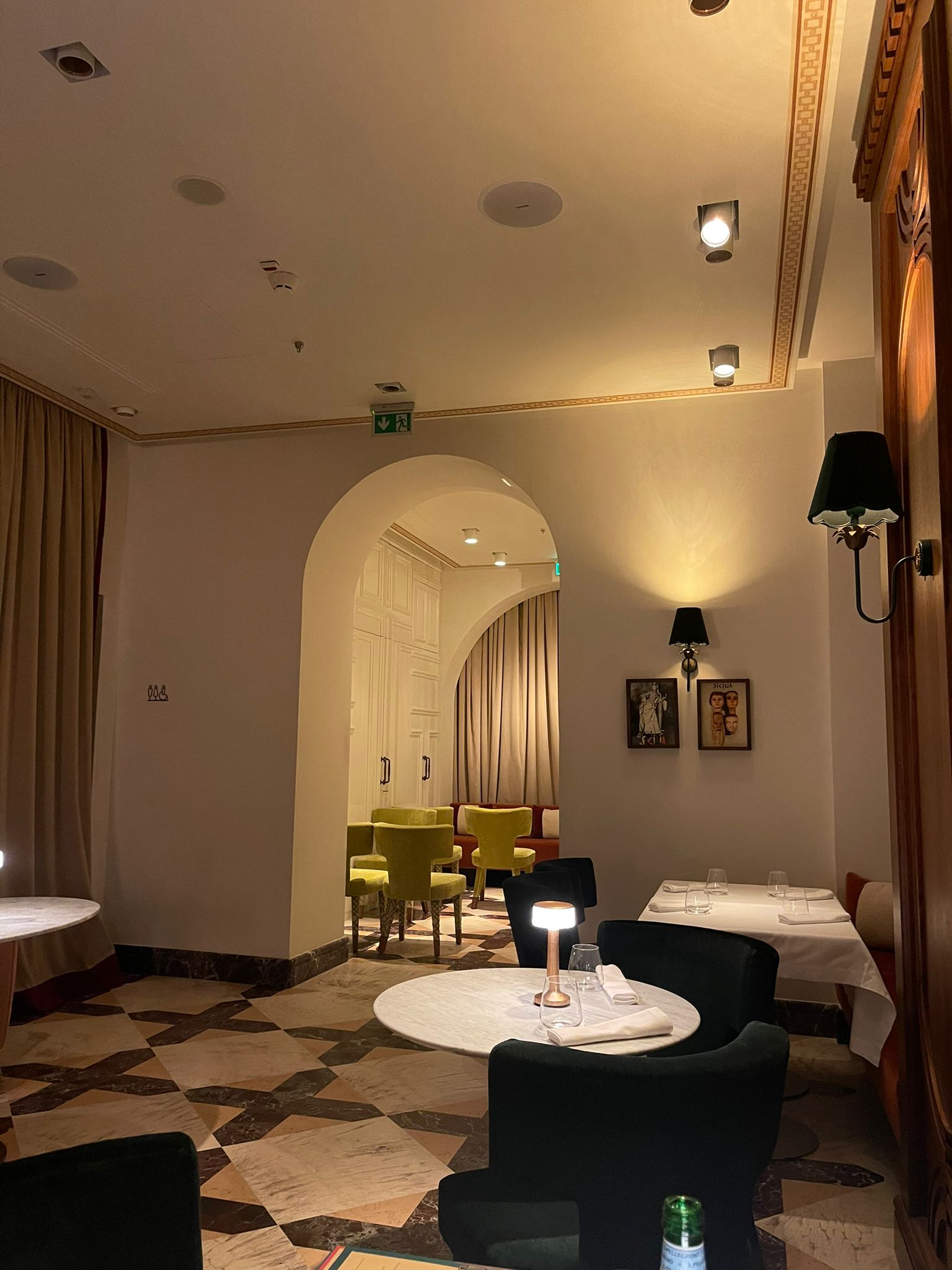
Dining at W Rome centres on Giano Restaurant, which serves a menu created by chef Ciccio Sultano. It anchors the food offer with a Sicilian-influenced Italian kitchen, and it sits alongside a strong bar and rooftop programme rather than standing alone. Note that Giano is not a Michelin-starred restaurant, so it is best approached as a serious hotel dining room rather than a destination on that basis. Beyond Giano, the Citrico Rooftop is the casual draw, pairing pizza with cocktails and city views, and it fits the social, design-led personality of the hotel. The W Lounge and the Giardino Clandestino handle aperitivo and evening drinks, and both are central to the property's after-dark identity. The trade-off is atmosphere. These are lively, scene-driven spaces by design, which is a plus for guests who want energy and a minus for anyone seeking a quiet dinner. The food and drink are a genuine part of why people book W Rome, but they come wrapped in the same social buzz that defines the rest of the hotel.
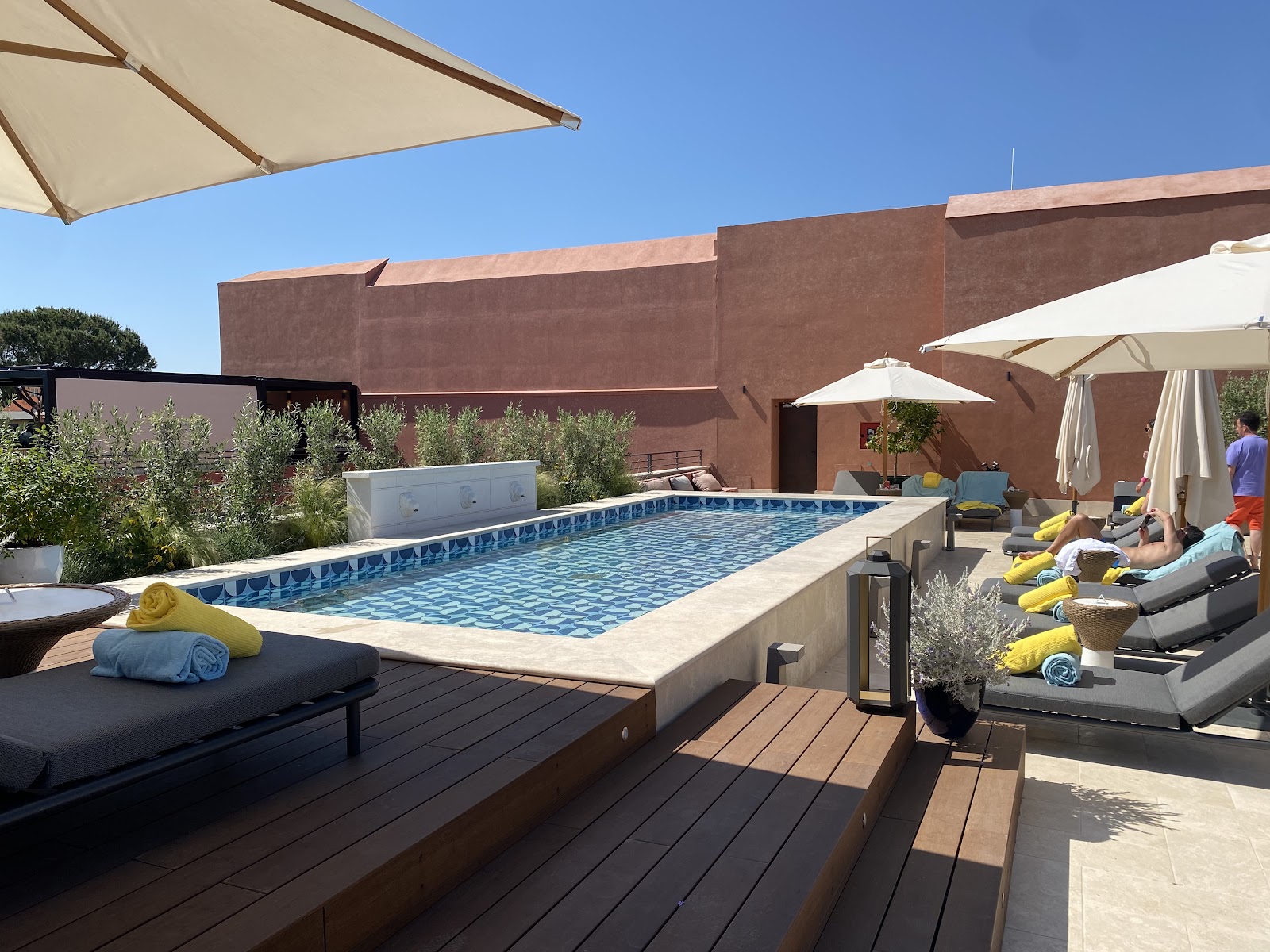
W Rome has an AWAY Spa and fitness facilities plus a small outdoor pool, so there is a wellness offer, but it is modest by luxury-hotel standards. The AWAY Spa and gym cover treatments and workouts, and they are a reasonable amenity for a city hotel focused more on social life than on spa retreats. The pool is the honest weak point. Guests consistently report that it is undersized and can get crowded, so travellers picturing long, calm swims or ample sun-lounging space will likely be disappointed. On a hot Rome afternoon it functions more as a cooling-off spot than a resort-style pool deck. For the guest this hotel targets, someone spending days exploring the city and evenings in its bars, the wellness facilities are a useful bonus rather than a reason to book. Anyone whose priority is a substantial spa or pool experience should weigh that carefully.
W Rome sits in the Ludovisi area, on Via Liguria near Via Veneto and within easy reach of the Spanish Steps. It is about a five-minute walk to Via Veneto, the grand avenue tied to Rome's dolce vita history, and roughly ten minutes on foot to the Spanish Steps, which puts major sights and shopping within a comfortable stroll. Public transport is straightforward from here. The Barberini and Spagna metro stations are both nearby, giving direct access to Line A and the wider network, which helps for reaching sights beyond the immediate centre such as the Vatican. This is a genuinely central, walkable base, and for most visitors that is the main practical reason to choose the hotel alongside its design. The honest caveat is the character of the area itself: this is a busy, upscale central district rather than a quiet residential pocket, so the streets carry city noise and activity. For travellers who want to step straight out into central Rome, the position works very well.
Guest reactions to W Rome split clearly along the lines of what people wanted from it. Those who come for design, energy and nightlife tend to be enthusiastic, praising the bold interiors, the rooftop and bars, and the central location that lets them walk to Via Veneto and the Spanish Steps. The complaints are consistent and worth taking seriously. Room and shower size is the most common, with guests feeling the space falls short of the price. Noise from the bars and social areas is the second recurring theme, particularly for rooms near those spaces, and the small, crowded pool draws its own criticism. The pattern that emerges is a hotel that delivers strongly on its stated personality and disappoints guests who expected something else. Travellers who read W Rome as a social, design-forward property and book accordingly tend to be happy. Those who arrived expecting a hushed, spacious, classical Roman five-star are the ones most likely to leave frustrated, which makes matching expectations to the concept important.
The clearest drawback at W Rome is room and shower size, which guests repeatedly describe as smaller than expected for rates that run from roughly EUR 300 to 500. Travellers who value generous space should book a higher category or look elsewhere, because this is the single most consistent complaint. Noise is the second issue. The hotel is built around its bars, lounges and social areas, so sound from the nightlife can reach rooms, especially those close to those spaces, and light sleepers should request a quieter location when booking. The pool is the third. It is small and often crowded, so it does not deliver the relaxed swimming or lounging some guests expect at this level. Finally, the whole social, party-forward concept is itself a con for anyone seeking a quiet, traditional Roman stay, since the energy that defines the hotel is exactly what such a guest wants to avoid. None of these is unusual for the concept; they simply reflect the kind of hotel W Rome chooses to be.
W Rome is not primarily aimed at families. Its social, design-led concept, lively bars and small pool suit younger, nightlife-minded travellers and couples more than young children. Families can stay here for the central location, but should expect noise from the public areas and compact rooms.
No. Neither the hotel nor its Giano Restaurant, which serves a menu by chef Ciccio Sultano, holds a Michelin star. Giano is still a serious hotel dining room with a Sicilian-influenced Italian menu, but guests should approach it on that basis rather than expecting starred dining.
W Rome is roughly a ten-minute walk from the Spanish Steps and about five minutes from Via Veneto. The nearby Barberini and Spagna metro stations on Line A also make it easy to reach sights further out, so the hotel works as a central base.
The outdoor pool is small and guests often report it gets crowded, so it functions more as a spot to cool off than a full pool experience. If a substantial pool or sun deck matters to you, treat it as a minor amenity rather than a highlight.
W Rome best suits younger, design-driven luxury travellers who want nightlife, social energy and a central location within walking distance of Via Veneto and the Spanish Steps. Guests seeking a quiet, spacious, traditional Roman five-star with a large spa or pool are likely to be happier elsewhere.
Off peak pricing, suite upgrades, and subscriber only offers, flagged only when the value is real.