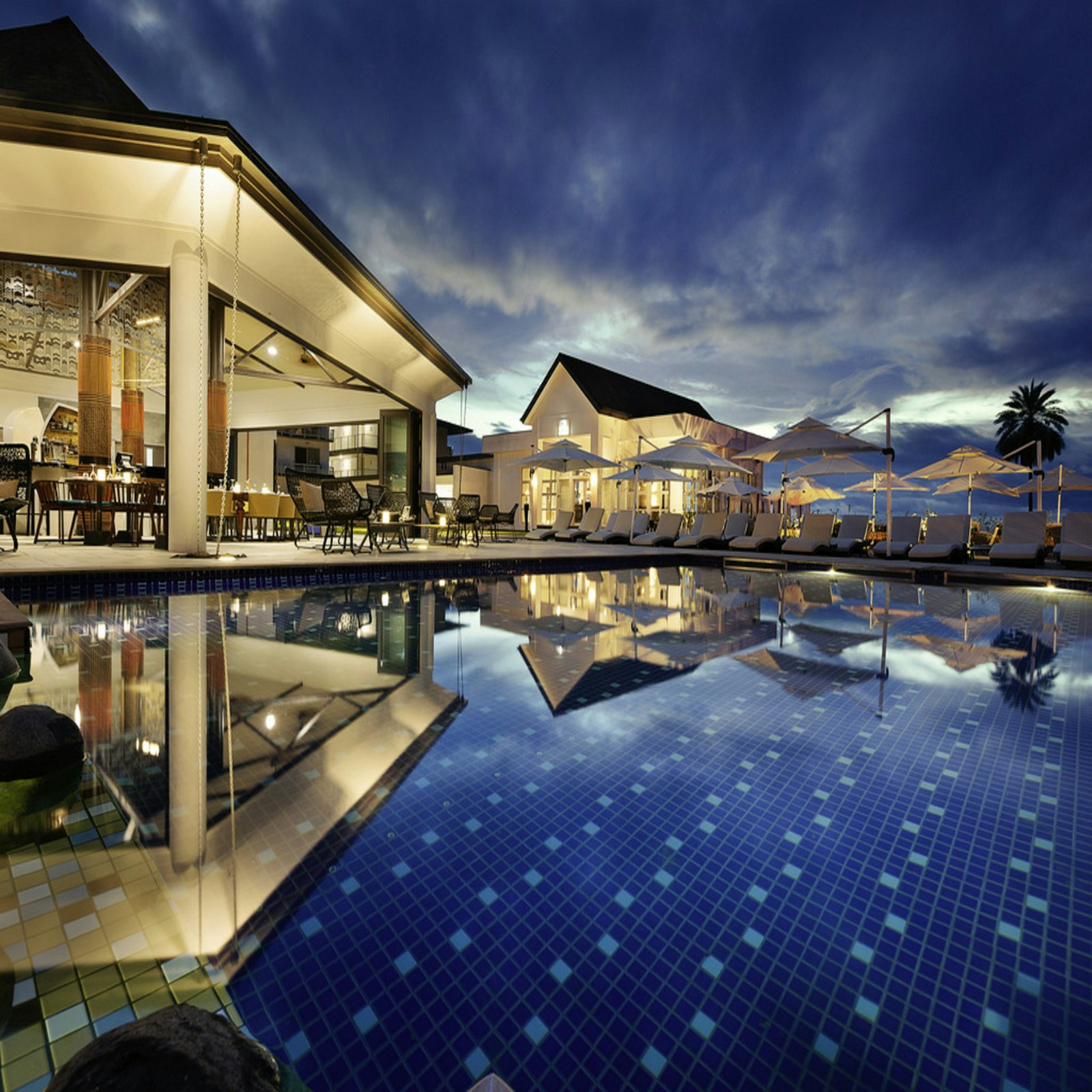
The luxury hotels that get babies right go beyond a spare cot. They stock real cribs, bottle warmers and sterilisers in advance, offer vetted in-room nannies for evenings out, quiet rooms and infant-appropriate food. Four Seasons and Beaches Resorts run the most defined baby programmes, but the rule everywhere is the same: confirm the specifics in writing before you book.
Want the shortlist?
Hotel picks and subscriber only special offers, curated weekly. Free to join.
What does baby-friendly luxury actually include?
Baby-friendly luxury means the hotel has done the logistics for you before you arrive, not that it merely tolerates a child in the room. Travelling with a baby under three is its own discipline, and the properties that take it seriously turn a potentially exhausting trip into a calm one. The difference shows up in six concrete areas, and each is worth confirming rather than assuming.
The first is equipment. A serious hotel provides a real fixed cot rather than a flimsy travel cot, plus a changing table, a bottle warmer and steriliser in the room, a high chair for meals and a baby monitor, all stocked in advance. The second is childcare: in-room qualified nannies, usually background-checked and experienced, booked by the hour so that parents can have dinner out. Rates commonly run from about 50 to 150 US dollars an hour depending on the destination. The third is medical access. Some hotels keep a paediatrician on call or a nearby contact, which matters more than people expect on international trips with an infant.
The fourth is infant wellness, which sounds indulgent and is genuinely useful: baby massage, infant swim sessions and baby yoga at properties that run them. The fifth is a quiet room, sound-insulated and set away from lifts and busy corridors so that naps and early bedtimes actually hold. The sixth is food: pureed meals, formula preparation and the flexibility to accommodate a baby's diet and schedule. A hotel that can tick all six is rare, and the ones that do are the properties worth paying for when you travel with the youngest guests.
Which hotels run the strongest baby programmes?
Two names run the most clearly defined baby programmes, and beyond them the best options are private-island and villa properties chosen for space and quiet. It is worth separating hotels that market a named infant programme from those that simply handle babies well without one, because the second group requires more homework from you.
Four Seasons sets the standard. Alongside the long-running Kids For All Seasons programme for ages four to twelve, the brand has introduced Babies For All Seasons for infants, which provides cribs, baby bathtubs, changing pads, play mats and breastfeeding pillows in addition to standard high chairs and swim diapers. The programme debuted at Four Seasons Resort Punta Mita and is rolling out, so confirm what a specific property offers, but the direction is the most infant-focused of any major luxury brand.
Beaches Resorts, the family brand from Sandals, is the strongest all-inclusive choice in the Caribbean. Where Sandals itself is couples-only, Beaches is built for families, and children are supervised by INA-certified nannies through its Kids Camp, with the all-inclusive model removing most of the on-the-day decisions. For parents who want everything handled on one bill, it is the most practical option here.
For families who prize seclusion and space over a formal programme, three properties stand out and are all currently operating. COMO Parrot Cay in Turks and Caicos is a private-island retreat with the room and privacy that suit a baby, paired with COMO Shambhala wellness for parents. The Brando on Tetiaroa in French Polynesia offers whole villas with the space a family needs on a remote atoll. Royal Mansour Marrakech uses a riad model, so you effectively take a private multi-floor house with its own staff, which is quiet and contained in a way a standard room is not. None of these markets a headline baby programme in the way Four Seasons does, so treat the equipment checklist below as mandatory and confirm each item before you commit.
What should you confirm before you arrive?
Confirm the practical details in writing at booking, because a hotel calling itself baby-friendly can mean anything from a full nursery to a single borrowed travel cot. The gap between those two is the difference between a restful trip and a difficult one, and email confirmation protects you if something is not there on arrival.
Ask the hotel to confirm, in writing, a real fixed cot rather than a travel cot, a high chair, a bottle warmer in the room, access to a steriliser, nanny availability for the evenings you want and a paediatric reference contact. Separately, plan what you bring from home: familiar bedding or a comfort blanket, your usual formula or baby food, three or four familiar toys and travel-size baby supplies, always packing more than you think you need. Finally, think about arrival timing. Try not to land at your baby's usual nap time, and align the journey with their schedule where you can, since a smooth first day sets the tone for the stay.
What are the common challenges on the ground?
The recurring problems are predictable, which means you can plan for them. Four come up again and again with infants, and each has a straightforward mitigation.
Time-zone adjustment is the biggest. Babies struggle with shifts of six hours or more, so build in one to two days for adjustment rather than expecting normal sleep on night one. Sound sensitivity is the second: a quiet, well-insulated room genuinely matters, so confirm it at booking rather than hoping. The third is food access, because some destinations simply do not stock familiar baby brands, so bring more than you expect to use. The fourth is medical access, which varies dramatically by destination; paediatric care that is excellent in one country can be hours away in another, so check before booking, not after landing.
What are the honest trade-offs?
The honest trade-off is that a five-star room is not automatically a baby-ready one, and the premium can buy style rather than substance. Plenty of beautiful hotels are impractical for infants: hard-surfaced design rooms with no soft space to put a baby down, restaurants that do not do early or pureed meals, and pools with no shallow area or shade. A named baby programme also does not always mean it is live at every property in the brand, which is why Four Seasons infant amenities need checking property by property. Nanny services add up quickly at 50 to 150 US dollars an hour, all-inclusive family resorts can feel less exclusive than a quiet private-island lodge, and the very seclusion that makes a remote island restful also puts you far from a hospital. None of this argues against travelling with a baby in luxury; it argues for vetting the specifics, so that you pay for practicality and not just a pretty room.
Five rules to book by
If you remember nothing else, book by these five rules, each of which heads off one of the failure points above.
- Confirm the cot type, steriliser and bottle warmer in writing before you pay, not on arrival.
- Book evening nannies early, and ask whether they are certified and background-checked.
- Get a paediatric reference contact from the hotel at booking, especially for international trips.
- Bring more than you think you need in supplies, familiar toys and food.
- Request a quiet, well-insulated room explicitly, away from lifts and busy areas.
For the wider framework on travelling with children, see our family hotels pillar, and for the pre-baby trip, the best babymoon hotels. When the family grows, multi-generational hotels and family-holiday properties pick up where infant travel leaves off.