A solar-powered hotel should be able to tell you two numbers: how much solar it has installed, and what share of its energy that actually delivers. The five properties below can, ranging from a Serengeti camp that runs on an on-site solar array to The Brando, where 4,700 panels meet about 60 percent of demand. Below each, the honest figures, plus how to spot solar that is marketing rather than megawatts.
Disclosure: HotelsForKings is reader-supported. When you book through links on this page we may earn a commission at no extra cost to you. We rank editorially and never accept payment for placement. Energy figures are drawn from the resorts' own published sustainability reporting and reputable trade coverage, verified July 2026.
Save this for later
Get our guides plus subscriber only hotel offers by email, every Sunday.
Solar share, side by side
The single most useful thing a solar hotel can publish is the percentage of its energy that actually comes from the sun. Here is where these five stand, with the caveat that shares shift as resorts add capacity.
| Hotel | Location | Solar setup | Approx. solar share |
|---|---|---|---|
| The Brando | Tetiaroa, French Polynesia | 4,700+ PV panels, batteries, SWAC cooling | ~60% of energy |
| Singita Sabora | Grumeti, Serengeti, Tanzania | On-site solar PV, remote camp | Runs the camp on solar |
| Soneva Fushi | Baa Atoll, Maldives | ~2.55 MWp solar + 2.7 MWh battery | ~40 to 45% of power |
| Bambu Indah | Ubud, Bali | Solar plus passive cooling, boutique scale | Partial, small property |
| The Datai Langkawi | Langkawi, Malaysia | Solar within a wider eco program | Partial, waste-led |
The five, with real numbers
Ranked by how much of the story is genuinely solar. The leaders quantify their generation; the boutique entries are honest about doing less at smaller scale.
1. The Brando, French Polynesia
The Brando is the benchmark. More than 4,700 photovoltaic panels on the atoll's airstrip meet roughly 60 percent of the resort's energy needs, with lithium batteries carrying it through the night, and its deep-water sea-water air-conditioning (SWAC) system, the largest in the world, supplies about 90 percent of the cooling using water drawn from around 900 metres down. It opened in 2014 aiming to be effectively carbon-neutral and became the first resort to earn LEED Platinum certification. It is remote and expensive, but on the numbers it is the real thing. See more in the sustainable hotels guide.

2. Singita Sabora Tented Camp, Tanzania
Rebuilt and reopened in 2021, Sabora sits in the 350,000-acre Singita Grumeti reserve in the western Serengeti and is powered by an on-site solar PV system, the practical way to run a luxury camp with no grid for miles. Beyond energy, Singita funnels support into the non-profit Grumeti Fund's wildlife and community work, so the stay underwrites conservation as well as running clean. For more of this kind of property, see our safari lodge guide.
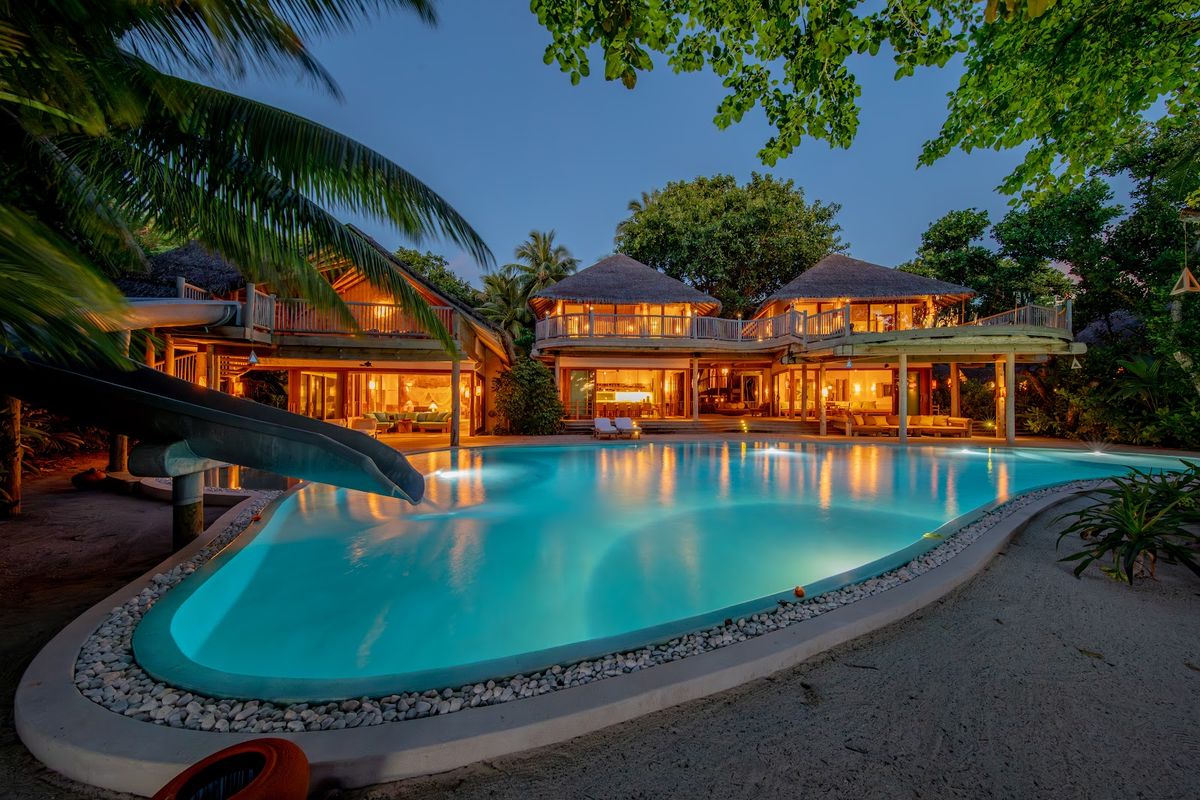
3. Soneva Fushi, Maldives
Soneva Fushi installed the Maldives' first resort solar facility back in 2008 and now runs a solar-battery microgrid of around 2.55 megawatts-peak (with roughly 2.7 megawatt-hours of storage) that supplies about 40 to 45 percent of the resort's power, with a stated push to raise that share. It is not off-grid, but for a large resort in the Maldives it is a serious, quantified commitment rather than a token array.
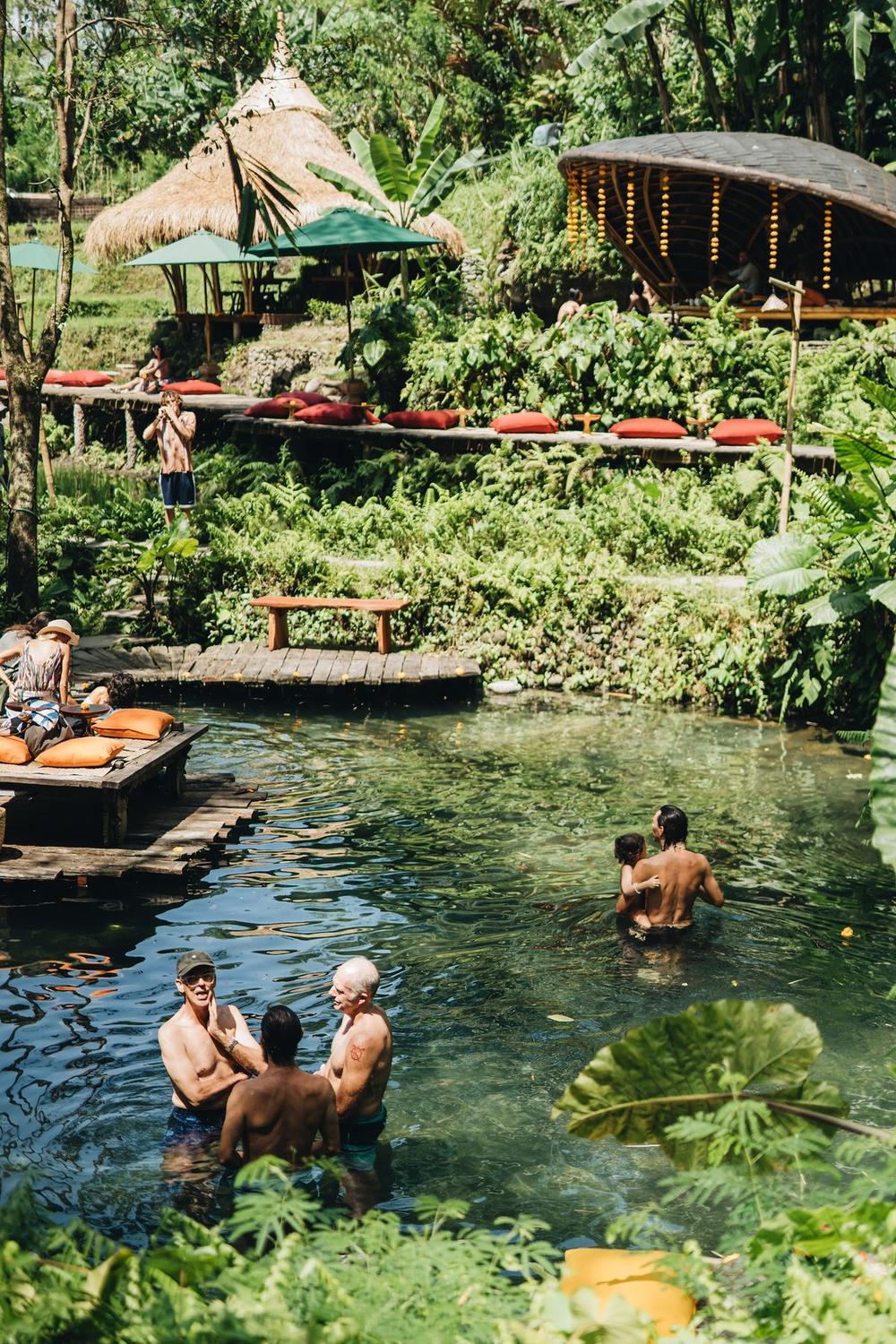
4. Bambu Indah, Bali
Built by Green School founders John and Cynthia Hardy in the Ayung valley near Ubud, Bambu Indah pairs solar power with passive cooling, permaculture gardens and rescued antique Javanese houses. It is a small boutique property, so the solar does less in absolute terms than a big resort's array, but the whole design philosophy is low-impact rather than bolt-on. A characterful Bali choice for travellers who value the ethos.
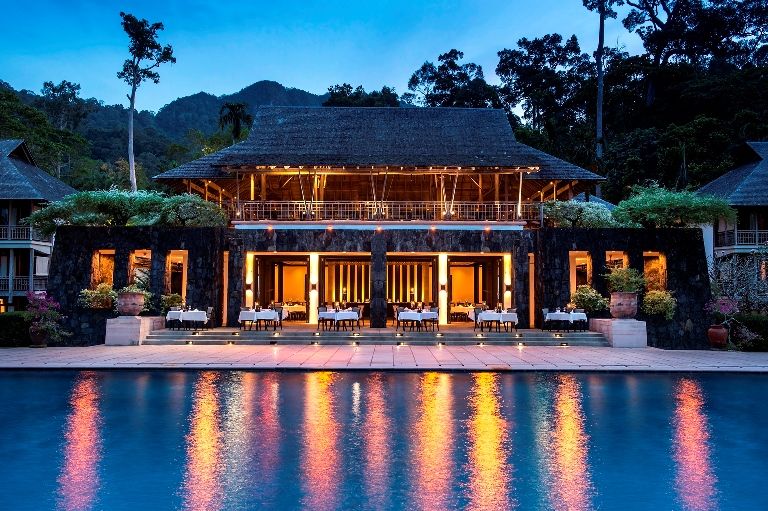
5. The Datai Langkawi, Malaysia
The Datai in Langkawi uses solar as one strand of a broader sustainability program, and it is worth including precisely because it is honest about scale: its headline achievements are elsewhere, notably diverting around 96 percent of waste from landfill in 2023 and processing all food waste on site. Read it as a rainforest resort doing real environmental work across many fronts, with solar as a supporting player rather than the star.
What solar capacity actually delivers
Solar claims fall into three honest bands. Knowing which one a hotel is in tells you whether the panels matter.
Category 1: off-grid or near-100 percent
Usually small, remote properties, tented camps and private islands, that pair solar with battery storage and simply have no grid to fall back on. Sabora sits nearest this end.
Category 2: significant solar (roughly 40 to 60 percent)
Larger resorts that generate a serious, quantified share but still need storage or backup for night-time and peak cooling. The Brando and Soneva Fushi live here. This is where most credible large-hotel solar realistically lands.
Category 3: token solar (10 to 30 percent, or unquantified)
A visible array that mostly supports marketing. Not worthless, but not the reason to book. If a hotel cannot give you a number, assume it belongs here.
How to verify a solar claim
Ask for two figures and treat their absence as an answer. First, installed capacity in kilowatts or megawatts-peak, the size of the system. Second, and more important, the percentage of total energy the panels actually supply across a year, because a big array on a huge resort can still be a small share. Genuine solar hotels publish both; The Brando and Soneva Fushi are good models of transparency. One honest caveat worth remembering: solar is not the only low-carbon path. Some standout eco-hotels, particularly in Iceland, run largely on geothermal rather than the sun, which is cleaner still in those settings, so do not dismiss a low-emission hotel just because its headline energy is not photovoltaic.
Five rules for choosing a solar hotel
- Ask for the solar share of total energy, not just "we have panels".
- Off-grid camps and private islands are where near-total solar is real.
- For big resorts, 40 to 60 percent solar is a strong, credible number.
- No published figures usually means token, marketing-grade solar.
- Weigh solar alongside water, waste and conservation, not in isolation.
Keep going with the sustainable hotels pillar, our guide to eco certifications explained, the regenerative travel and conservation lodges roundup, and our wellness retreat collection.
Frequently asked questions
Which luxury hotel uses the most solar power?
Among transparent properties, The Brando leads: more than 4,700 panels meet about 60 percent of its energy, alongside a sea-water cooling system supplying roughly 90 percent of its air-conditioning. Singita Sabora runs its Serengeti camp on solar PV.
Can a hotel run entirely on solar?
Small remote camps can come close by pairing panels with batteries. Larger resorts realistically reach 40 to 60 percent, because peak cooling and night demand still need storage or backup. Be sceptical of unqualified 100-percent claims.
How can I spot greenwashing?
Look for a published capacity in kilowatts or megawatts and the percentage of energy the panels actually supply. Real solar hotels quantify both; vague "eco-friendly" language with no numbers usually means token solar.
Is Soneva Fushi solar powered?
Partly. It built the Maldives' first resort solar plant in 2008 and now runs a roughly 2.55 megawatt-peak solar-battery microgrid supplying about 40 to 45 percent of its power, with plans to raise that share.