Tokyo is a city of distinct neighbourhoods, each its own city. The default tourist choice (Shibuya or Shinjuku) is rarely the right one for luxury travellers. The framework below is the working version we use.
Marunouchi and Otemachi — for business and quality
The corporate heart of Tokyo, immediately east of the Imperial Palace. The luxury hotels here are the strongest in the city.
Picks:
- Aman Tokyo — the senior pick. Top six floors of the Otemachi Tower with views over the Imperial Palace
- The Peninsula Tokyo — heritage Asian luxury, with the strongest single afternoon tea programme in the city
- Mandarin Oriental Tokyo — the highest hotel in central Tokyo, with city views from every room
- Four Seasons Hotel Tokyo at Otemachi — newer, design-forward, opened 2020
Aman Tokyo is what we recommend for executive travel and any trip where the hotel is the central experience. The Mandarin Oriental is the strongest urban view.
Aoyama and Roppongi Hills — for residential luxury
Aoyama is residential, design-led, and home to most of the city's interesting boutiques. Roppongi Hills is the more international neighbourhood with stronger nightlife.
Picks:
- The Trunk Hotel — boutique design hotel in Shibuya/Aoyama border
- Andaz Tokyo Toranomon Hills — the design-led Hyatt property, with the strongest rooftop bar in Tokyo
- Grand Hyatt Tokyo — Roppongi Hills, classic luxury
For couples wanting depth in Tokyo, Aoyama is the right neighbourhood. The walking is excellent and the food is the most-curated in the city.
Ginza — for tradition
Ginza is Tokyo's heritage luxury shopping district. The streets are wide, the lighting elegant, and the food culture exceptional. The hotels are heritage but not always the most-modern.
Picks:
- The Tokyo EDITION, Ginza — Ian Schrager design hotel
- Imperial Hotel Tokyo — heritage Imperial, slightly dated but historic
- Hotel The Celestine Ginza — boutique alternative
For couples wanting old Tokyo, Ginza is the right answer. For couples wanting modern Tokyo, Marunouchi or Aoyama is better.
Naka-Meguro and Daikanyama — for the underrated
Naka-Meguro has the cherry blossoms, the river, and Tokyo's most-Instagrammed walk in spring. Daikanyama is the design-conscious neighbourhood with the famous Tsutaya book complex. Both are emerging luxury hotel areas.
Picks:
- Trunk House Daikanyama — single-villa private rental, exclusive
- Hotel Niwa Tokyo — boutique with strong design
For couples on second-or-later Tokyo visits, this is where the most-interesting Tokyo is happening.
Shibuya — for energy
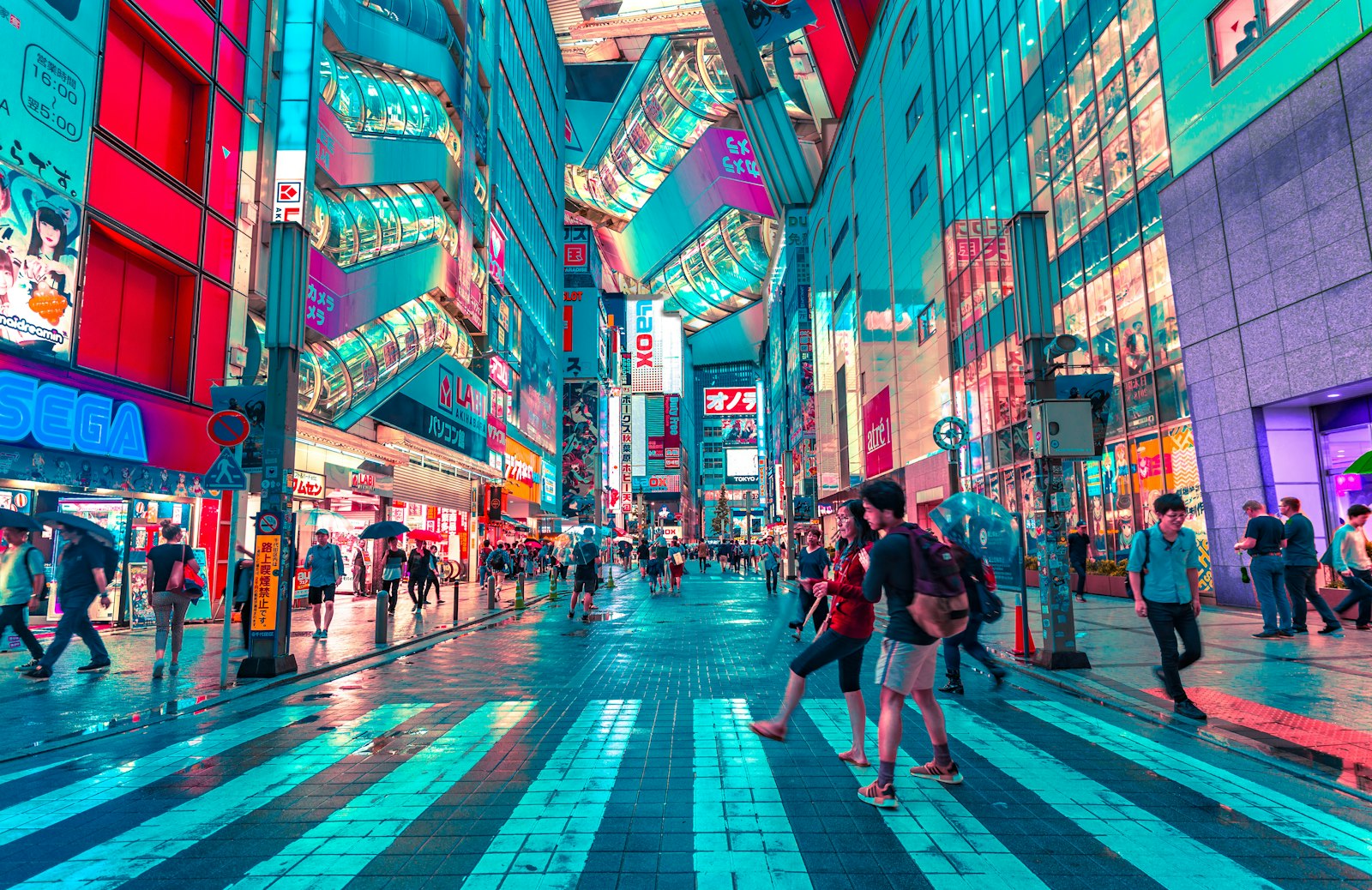
Shibuya is what most tourists default to. The Scramble Crossing, the shops, the noise. It is also where the most contemporary Tokyo hospitality lives.
Picks:
- Cerulean Tower Tokyu Hotel — view-led, slightly older
- Trunk Hotel (also listed under Aoyama) — borders Shibuya
For first-time Tokyo visitors who want to be in the action, Shibuya is the right answer. For returning visitors, choose elsewhere.
A simple decision framework
- First Tokyo visit + business focus: Marunouchi (Aman Tokyo, Mandarin Oriental)
- First Tokyo visit + leisure focus: Aoyama (Andaz Tokyo) or Ginza (Edition Tokyo Ginza)
- Second visit: Naka-Meguro / Daikanyama (Trunk House)
- Anniversary or honeymoon: Aman Tokyo or Hoshinoya Tokyo
- Business trip: Aman Tokyo or Four Seasons Otemachi
- Weekend with food focus: Ginza or Aoyama
- Cherry blossom season: Naka-Meguro
When to visit Tokyo
Tokyo has clear seasonal windows:
- Late March-early April: cherry blossoms, peak weather, peak rates
- October-November: autumn colours, mild weather, slightly lower rates
- May-early June: post-cherry-blossom, warm but not yet humid
Avoid: late July-August (humid, uncomfortable), February (cold, short days), Golden Week (late April-early May, all of Japan travels).
What Tokyo concierges do best
Three things Tokyo concierges arrange that most travellers do not ask for:
- Reservations at the impossible sushi restaurants (Sukiyabashi Jiro, Sushi Saito) — book through the concierge, not yourself
- A traditional kaiseki dinner at a ryotei
- Private tea ceremony at a tea master's home
Tokyo concierges have access tourists do not. Use them aggressively.
A specific Tokyo eating pattern
Tokyo's restaurant culture rewards a specific approach: rather than trying many restaurants in one trip, focus deeply on a few categories (sushi, kaiseki, izakaya, yakitori) and visit a serious example of each.
A 5-night Tokyo trip produces 15 meals (breakfast, lunch, dinner). The pattern that works:
- 5 hotel breakfasts (the morning Japanese breakfast is the meal that introduces the day)
- 5 lunches at lunch-specific restaurants (sushi at counter, soba shops, tonkatsu)
- 5 dinners at categorical restaurants (one sushi omakase, one kaiseki, one izakaya, one yakitori, one teppanyaki)
This pattern produces deep engagement with Japanese food culture rather than surface coverage.
The morning Tokyo experience
A specific morning ritual that produces the strongest Tokyo memories:
Wake at 5:30am. Walk to the Tsukiji Outer Market by 6am. Eat a sushi breakfast at one of the small counter restaurants. Visit a temple at 7am (most temples are quiet at this hour). Return to the hotel for breakfast or a second breakfast at 9am.
The early Tokyo morning rewards the traveller who engages with it. Most tourists wake at 8am and miss the most-Japanese hour of the day.
What Tokyo travellers consistently miss
Three specific things that improve a Tokyo trip:
- A traditional tea ceremony at a tea master's home (arrange via concierge; not a public experience)
- A walk through one of the inland residential districts (Yanaka is the most-atmospheric)
- A visit to a small art museum (the Nezu Museum or the Mori Art Museum)
The standard tourist itinerary (Shibuya Crossing, Harajuku, Asakusa) covers Tokyo's surface. The deeper Tokyo experiences are quieter and more rewarding.
Five rules for Tokyo hotel selection
- Choose neighbourhood before hotel
- Get a JR Pass before arrival if combining Tokyo with Kyoto or Osaka
- Cash is still essential in Tokyo; many restaurants do not accept cards
- The hotel concierge is the single most-valuable amenity in Tokyo; build the relationship early
- Hoshinoya Tokyo is technically a ryokan, not a hotel; the experience is different
For more, browse the full Tokyo hotel directory.