Paris, France · Palace Hotel · ★★★★★
Hôtel de Crillon
The palace that predates the French Revolution and outlasted it.
The palace that predates the French Revolution and outlasted it.
"Built for Louis XV in 1758 and still receiving guests — at some point the Crillon stopped being a hotel and became an institution. Rosewood understood this and restored it accordingly: no superfluous modernity, just a very old building made to feel genuinely cared for."
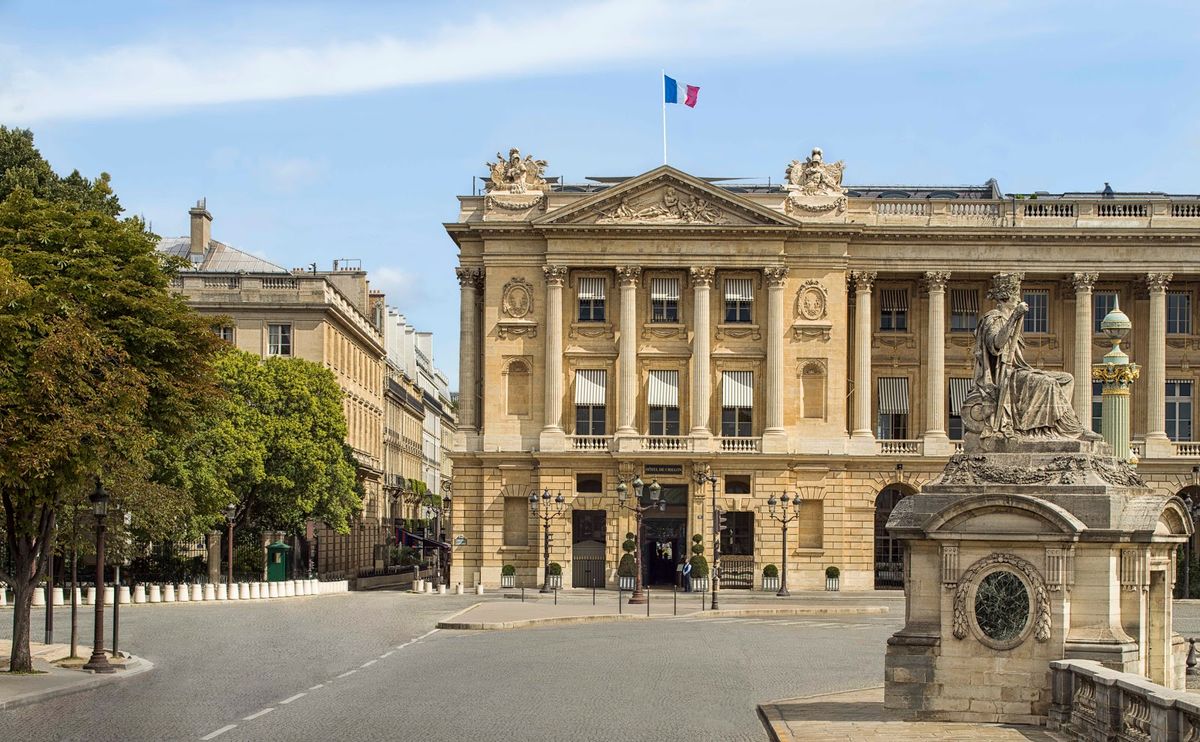
King Louis XV commissioned the Crillon in 1758 as one of two identical neoclassical palaces flanking the Place de la Concorde — the square that would later become the site of the guillotine. The palace survived the Revolution. It became a hotel in 1909. Marie Antoinette took piano lessons in the room that is now the hotel's most coveted suite. The building has witnessed more French history than most French history books contain.
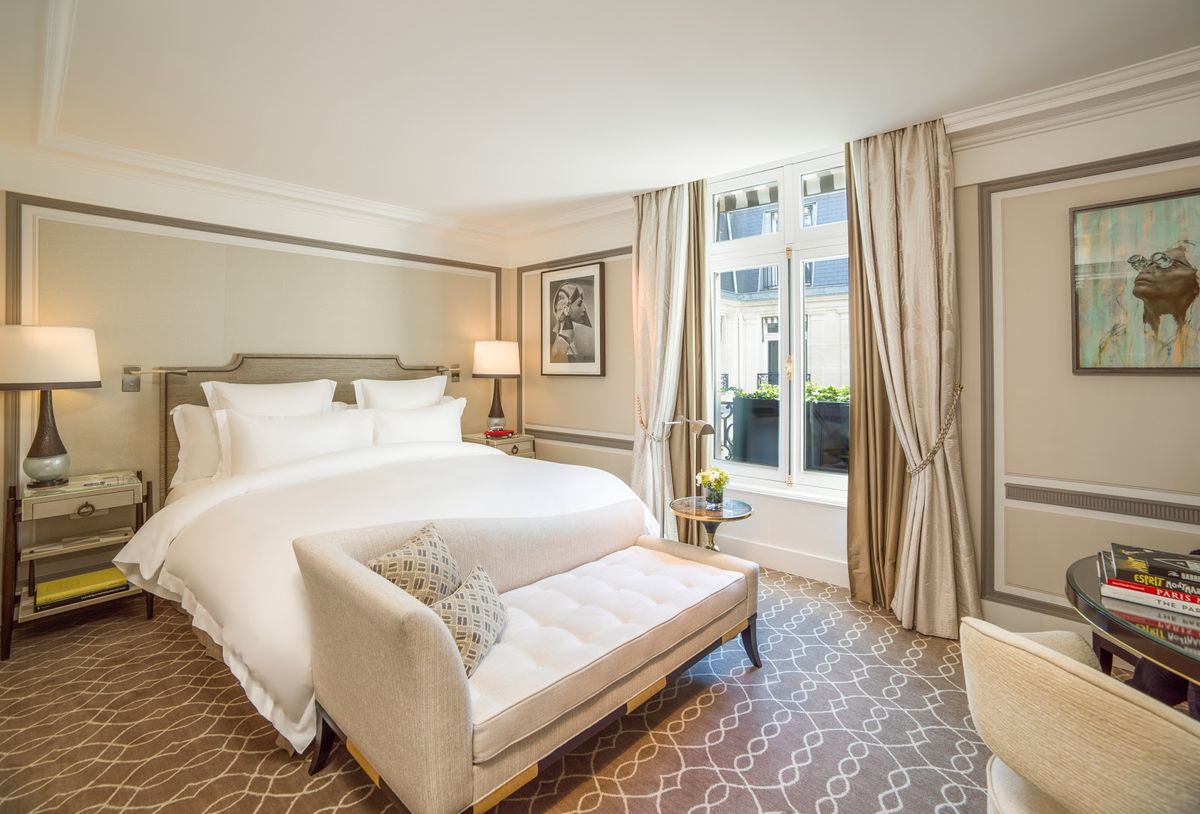
Rosewood acquired the Crillon in 2013 and closed it for a four-year restoration overseen by designer Aline Asmar d'Amman. The brief was exceptional: preserve and celebrate the architecture without making it feel like a museum. She succeeded. The 78 rooms and 46 suites are dressed in hand-embroidered silks and bespoke furnishings, with the original Corinthian pilasters and gilded mouldings intact. The restoration won international design awards. More importantly, the rooms feel inhabited rather than preserved.
The building's position on Place de la Concorde is unmatched for symbolic weight. Walk out the front door and you face the Champs-Élysées in one direction and the Tuileries in the other. The Louvre is twelve minutes on foot. The Musée d'Orsay is a twenty-minute walk across the river. The Crillon has always been Paris's most central palace hotel, and the 2017 reopening confirmed it had earned that designation.
The restaurant Les Ambassadeurs, now reimagined as a contemporary brasserie, occupies one of Paris's great dining rooms — a gilt-and-marble hall that once served as the French Foreign Ministry's ceremonial salon. The cocktail bar Compagnie des Vins Surnaturels, a collaboration with the acclaimed wine bar of the same name, is one of the best wine experiences in the city. Afternoon tea in the Jardin d'Hiver, a glass-roofed winter garden, is a Paris ritual.
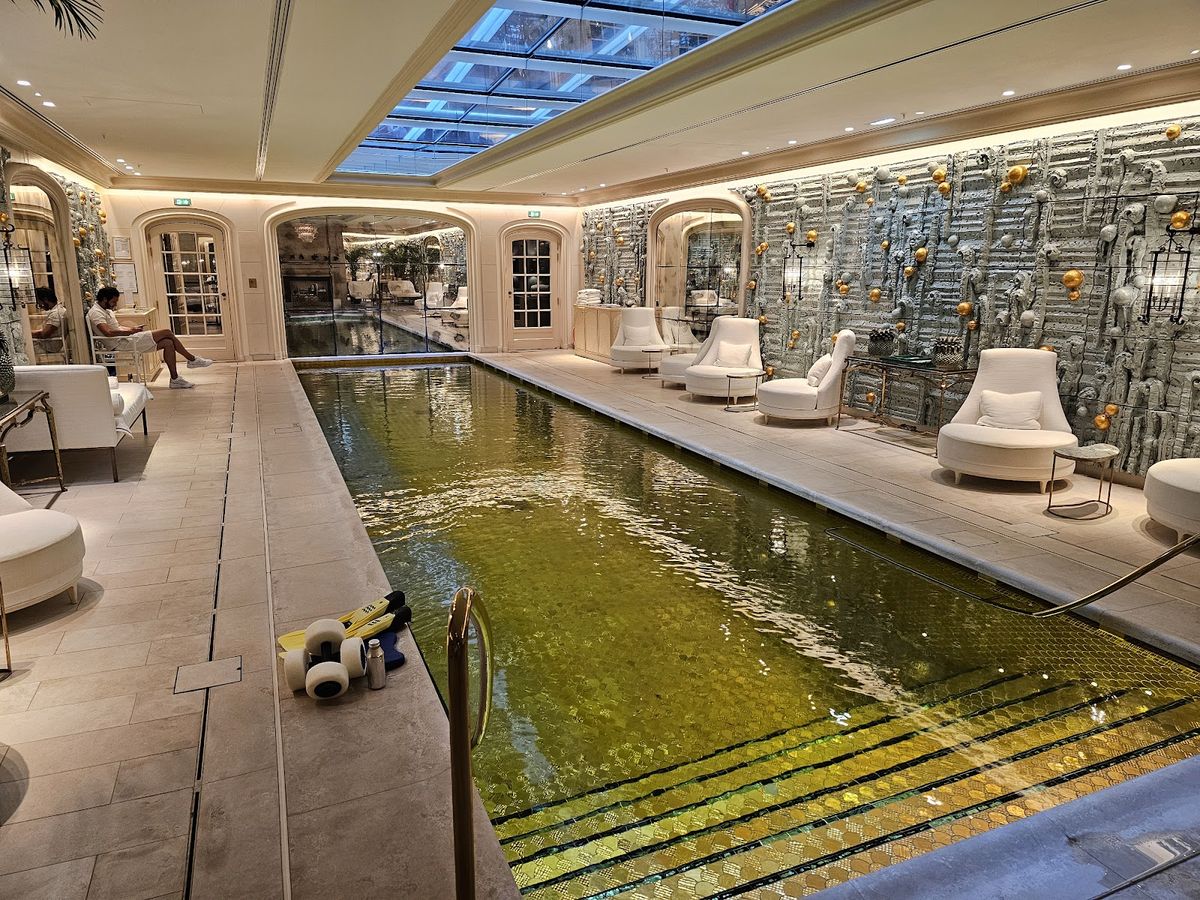
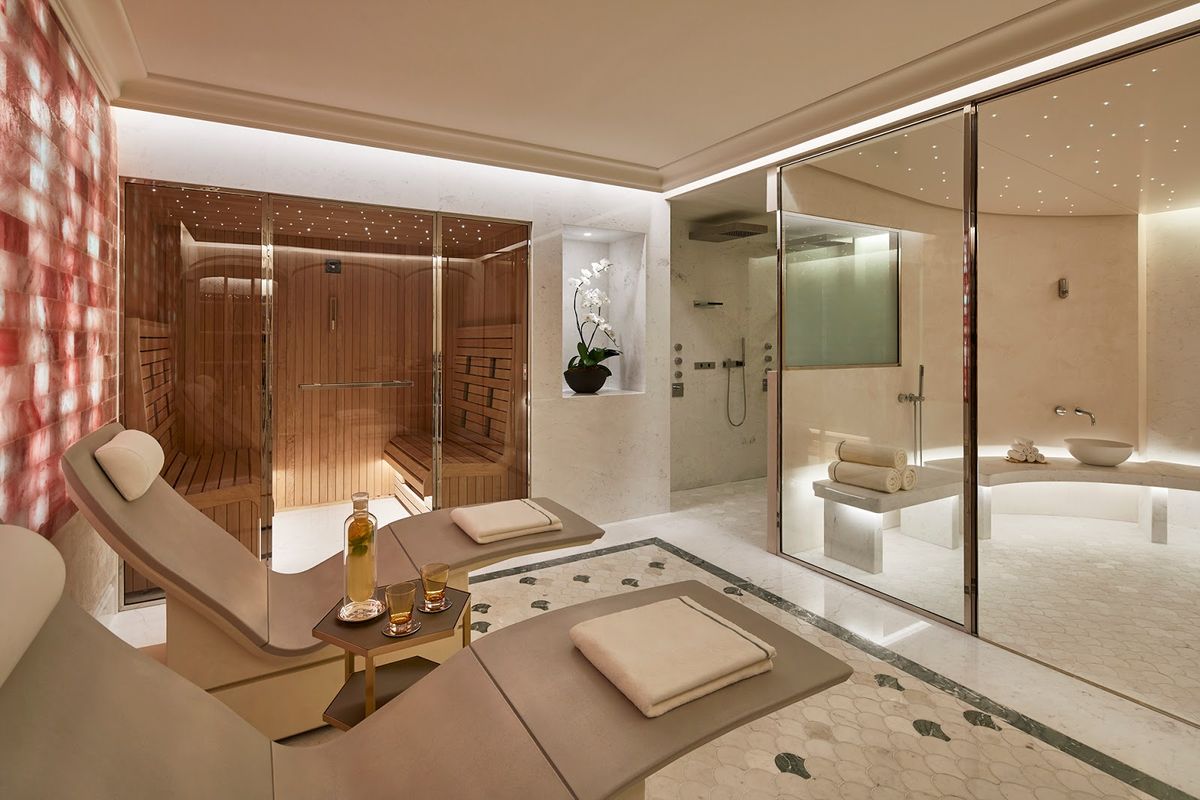
The spa occupies two floors below the palace, with a hammam, swimming pool, and treatment rooms that feel deliberately private. The fitness centre is genuine rather than decorative. The service throughout is of the Rosewood standard — warm, personal, not performatively formal. They call it "Residential Style": the idea that you are a guest in a private home, not a customer in a luxury establishment. At the Crillon, the house is extraordinary enough to make the distinction matter.
Request the Marie Antoinette Suite and you will sleep in the room where the queen practised piano as a child. The symbolism is not lost on the hotel — the suite is fitted with a private terrace overlooking the Place de la Concorde and is among the most extraordinary hotel rooms in Europe. For a honeymoon with genuine historical weight, there is no equivalent address in Paris.
The Jardin d'Hiver — the glass-roofed winter garden — is one of the most private and atmospheric settings for a proposal in the city. The concierge team will arrange flowers, champagne, and a private table with practised discretion. The building's weight of history makes the moment feel consequential in a way that more modern hotels cannot replicate.
The Crillon rewards returning guests. The Rosewood service philosophy places significant emphasis on remembering preferences — the room you prefer, how you take your coffee, the champagne you ordered on your last visit. For milestone anniversaries, the hotel will work with you in advance to design an experience that references your previous stays. The building itself provides the occasion; the team ensures the details match it.
Rates shown are approximate. Verify at time of booking.
The King's Suite
Monthly. No noise.