Kyoto asks a question no other Japanese city does: how close do you want to be to the temples, and what will you give up for it. The Higashiyama belt from Ninenzaka down past Kiyomizu-dera puts the most photographed streets in Japan at the door, and the price is crowds that arrive by nine and do not leave until dusk. The northern hills at Takagamine and the river valley at Arashiyama offer forest, moss and genuine quiet, at the cost of a car for everything. Central Nijo and the Kamogawa riverside sit between the two, with the practical advantage of being able to walk to dinner.
What separates the best is craft that the building actually contains. A hot spring drawn from a thousand metres beneath the city on land the Mitsui family held for 250 years. Twenty six pavilions in a private mossy forest that a collector spent decades assembling. A Kengo Kuma machiya beside a restored geisha theatre. An 800 year old pond garden that a hotel was designed around rather than dropped beside. Nine Tadao Ando suites on the Shirakawa canal in Gion. These are not amenities that can be bought in, and they are what the ranking rewards.
Two practical corrections. First, swimming pools are genuinely rare in Kyoto luxury hotels, and several of the very best have none at all: Aman Kyoto, Hotel The Mitsui, Capella, Park Hyatt, The Shinmonzen, Banyan Tree and Suiran. What matters more here is whether the water is a real natural hot spring, and only Aman, Mitsui, Banyan Tree, ROKU and Suiran have one. Second, on Michelin, this list has exactly one starred hotel restaurant, Jean-Georges at The Shinmonzen. Four Seasons Kyoto's Sushi Wakon closed and its replacement holds no Kyoto star, and the two stars near Park Hyatt belong to an independent 1877 ryotei next door, not to the hotel.
#1 in Kyoto
Facing Nijo Castle · Five-Star · rates on request
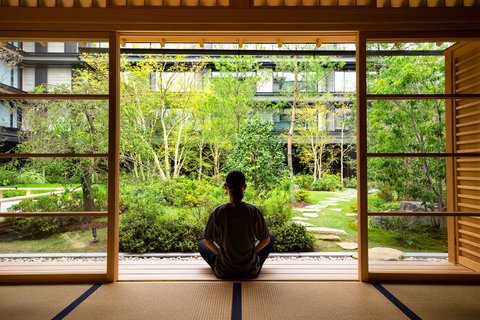
"The only three Michelin Key hotel in Kyoto, built on 250 years of Mitsui family land, with a natural hot spring drawn from a thousand metres below the city."
9.7Room & Design
9.7Service
9.4Location
Why this rank: The site is what makes this hotel, not the brand above the door. The Mitsui family, one of Japan's most storied merchant dynasties, held this land from the 17th century onwards for more than 250 years, and the hotel is built around what they left: the restored Kajiimiya Gate, carried over from the family estate, and a central Japanese garden that the whole property turns inward to face. Across the street is the main gate of Nijo Castle, a UNESCO World Heritage Site. The architecture is a modern reading of sukiya style, and it opened in November 2020 as part of Marriott's Luxury Collection. The second distinction is the MICHELIN Guide's hotel award. HOTEL THE MITSUI KYOTO holds three MICHELIN Keys and is the only Three Key hotel in Kyoto, one of a handful in Japan. Keys rate the hotel, not its kitchens, and no restaurant here holds a star, so read the award for what it is. Third is the water. A natural hot spring rises roughly 1,000 metres directly beneath the property and feeds a thermal spring spa of more than 1,000 square metres, which almost no city hotel anywhere can claim.
Best for: Travellers who want a genuine city-centre hot spring, subway access and Nijo Castle across the street
#2 in Kyoto
Forested Takagamine hills · Five-Star · rates on request

"Twenty six pavilions in a mossy private forest near Kinkaku-ji, with natural onsen bathing, Kerry Hill architecture and deliberately almost no facilities."
9.7Room & Design
9.6Service
8.5Location
Why this rank: The land came first, and it is still the best thing here. Decades ago a textile magnate assembled this site in the Takagamine hills intending to build a museum of obi and kimono art. The project was abandoned, and the terraces, stone paths and stepping stones he had already laid lay forgotten under moss until Aman found them. Kerry Hill Architects built the pavilions into those existing terraces rather than clearing them, which is why the property reads as a garden that happens to contain a hotel. Aman calls the roughly 32 hectares of moss, maple and cedar a secret garden, and for once the phrase is close to the truth. The scale is the second point. Twenty-six rooms, suites and pavilions across about 80 acres is a ratio no city hotel can match, and the architecture is a minimalist reading of the ryokan: timber, stone and shadow rather than ornament. Third, this is a real hot spring. Mineral-rich water rises near the resort and feeds traditional men's and women's onsen bathhouses. Two MICHELIN Keys recognise the hotel, not its kitchens, which hold no star.
Best for: Travellers who want forest silence, a real onsen and total privacy, and do not mind taxis for everything
#3 in Kyoto
Miyagawa-cho geisha district · Five-Star · rates on request
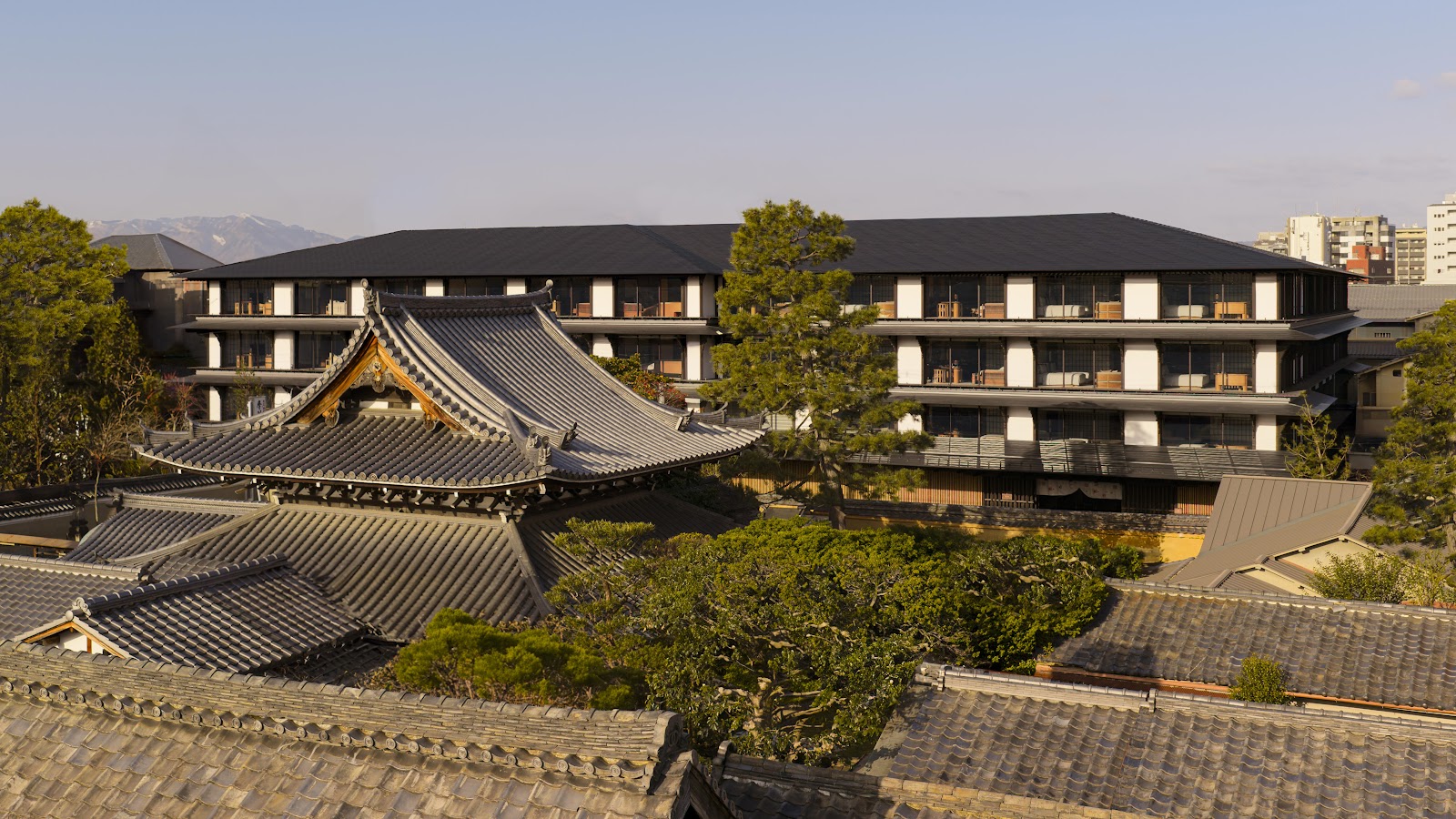
"A Kengo Kuma machiya beside a restored geisha theatre, with six private onsen suites and a Kyoto outpost of the California kitchen SingleThread."
9.6Room & Design
9.5Service
9.4Location
Why this rank: What makes Capella Kyoto unusual is the deal it struck with the neighbourhood. The hotel is one third of a three-part development on the site of the former Shinmichi Elementary School, alongside the restored Miyagawa-cho Kaburenjo Theatre, for generations the private training ground of Kyoto's geiko and maiko, and a new community centre. Guests get access to performances there, and a geiko or maiko performs in the hotel's Living Room daily before dinner. That is a level of access to the kagai world that money alone does not usually buy in Kyoto, and it is the reason to choose this hotel over a comparably priced rival. The building is by Kengo Kuma & Associates, four storeys, with interiors by Singapore's Brewin Design Office. Details from the school that stood here were kept: the Yoi bar is built with reclaimed timber and light fittings from the old building. Temper expectations on two points. It opened on 22 March 2026, so it holds no MICHELIN Key; the current Key selection was made before it existed. And it has months, not years, of guest feedback.
Best for: Travellers who want geisha-district access, generous new-build rooms and a private onsen suite in central Kyoto
#4 in Kyoto
Higashiyama temple district · Five-Star · rates on request

"Built around Shakusui-en, an 800 year old pond garden, with a 20 metre indoor pool and the most resort like grounds of any Kyoto hotel."
9.5Room & Design
9.6Service
9.2Location
Why this rank: The garden is the reason to stay here. Shakusui-en is an 800-year-old pond garden dating to the late Heian period and referenced in the 12th-century Tale of the Heike, and the hotel is built around it rather than beside it. There is a tea pavilion, Shakusui-tei, in the garden, a glass bridge across the water and koi feeding for children. Very few city hotels anywhere own a heritage garden of this age, and no amount of money can build another one. The second point is practical. Four Seasons Kyoto has a 20 metre indoor pool with jacuzzis and a 306 square metre 24-hour fitness centre, which puts it in the small group of Kyoto luxury hotels where you can actually swim. Aman Kyoto, HOTEL THE MITSUI KYOTO, Capella Kyoto and Park Hyatt Kyoto have no pool at all. Third, be clear about what it does not have. There is no natural hot spring, only an ofuro bathhouse, and no restaurant here holds a MICHELIN star. The hotel holds one MICHELIN Key, which rates the stay, not the kitchens.
Best for: Families and swimmers who want a heritage garden and easy transport, and accept taxis to Gion at night
#5 in Kyoto
Ninenzaka, Higashiyama · Five-Star · rates on request

"Seventy rooms on the Ninenzaka slope with direct Yasaka Pagoda views and a Japanese bathhouse instead of a pool, but heavy daytime crowds outside."
9.4Room & Design
9.4Service
9.6Location
Why this rank: Park Hyatt Kyoto's advantage is its ground. The hotel opened in October 2019 on historic temple grounds it shares with the Kyoyamato estate, a group of heritage buildings designated cultural assets by Kyoto City, complete with teahouses and gardens. At 70 rooms and suites it is one of the smallest Park Hyatts in the world, built as a run of low-slung interconnected buildings that read like a village on the Ninenzaka and Kodaiji slope. Rooms look straight out at the five-tiered Yasaka Pagoda over a townscape of machiya rooftops, on what is one of the most photographed streetscapes in Japan. The MICHELIN Guide awards the hotel one Key. One point needs stating plainly, because it is widely misreported: the two-MICHELIN-starred Kyoyamato, or Sanso Kyoyamato, is an independent ryotei founded in 1877 at the address next door, 359 Masuyacho. Park Hyatt Kyoto was built around and alongside it in 2019 and integrates it into the guest experience, but those two stars belong to the ryotei, not to the hotel. The hotel's own restaurants hold no star.
Best for: Travellers who want to step out of the door into old Higashiyama and will trade room size and facilities for that address.
#6 in Kyoto
Gion, on the Shirakawa · Five-Star · rates on request
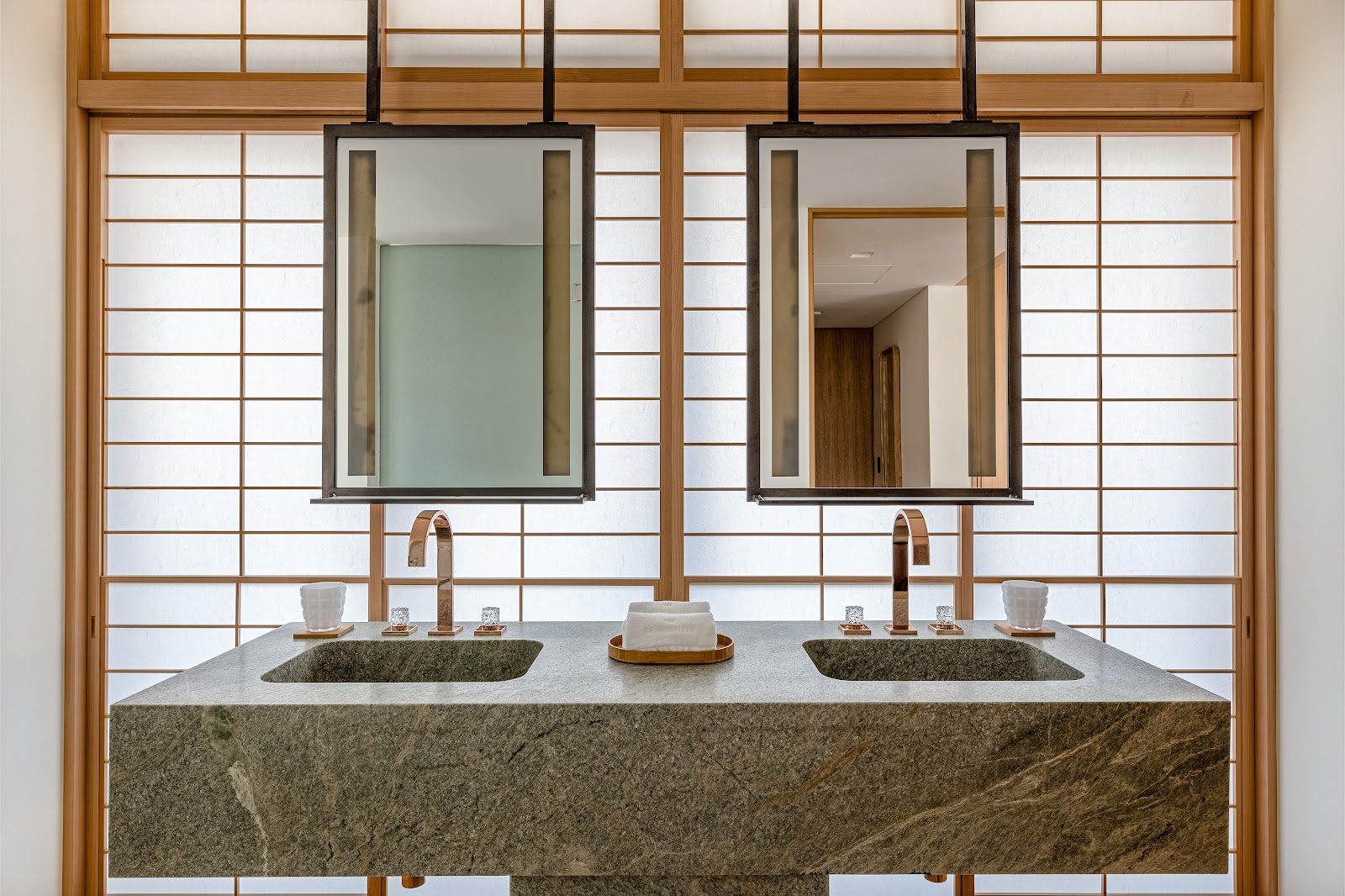
"Nine Tadao Ando suites in Gion holding the only verified Michelin starred hotel restaurant in Kyoto, plus a serious contemporary art collection."
9.6Room & Design
9.4Service
9.5Location
Why this rank: The Shinmonzen is Tadao Ando's first hotel in Kyoto, and the architecture is the reason to stay. Nine suites sit behind a facade on Shinmonzen-dori, the city's antiques street, between an art gallery and an antiques dealer, with the Shirakawa canal running past the door in the heart of Gion. Ando reinterprets the machiya townhouse in concrete and timber: tatami, shoji, low wooden furniture, cypress bathtubs and light kept deliberately muted. The hotel opened in 2021 and holds two MICHELIN Keys, a distinction it shares in Kyoto only with Aman Kyoto. It also holds something no other hotel in the city can claim: Jean-Georges at The Shinmonzen was promoted to one MICHELIN star in the 2025 guide and retained it in the MICHELIN Guide Kyoto Osaka 2026, making it the only verified Michelin-starred hotel restaurant in Kyoto. On site there is a serious contemporary art collection including work by international names such as Damien Hirst, and guests can take a private rickshaw tour of the city. The scale is domestic. With nine suites in total, the property runs closer to a private house than to a hotel, and availability is correspondingly scarce.
Best for: Design-led couples who want to sleep inside Tadao Ando architecture in Gion and eat at Kyoto's only starred hotel restaurant.
#7 in Kyoto
Higashiyama, opposite Toyokuni Shrine · Five-Star · rates on request
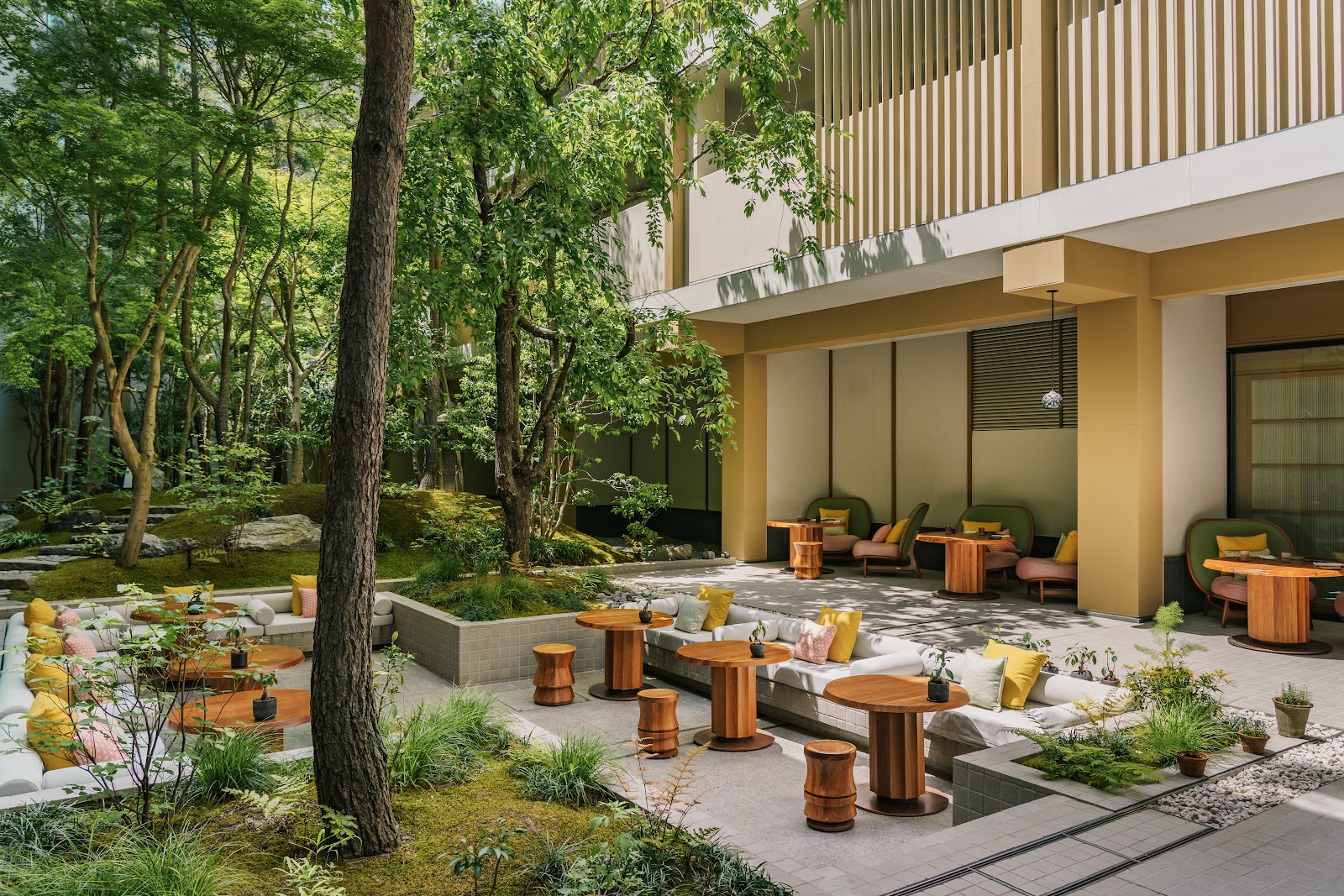
"The most wellness driven stay in Kyoto, with an indoor lap pool, a rare Watsu therapy pool and micro seasonal cooking at Sekki."
9.3Room & Design
9.3Service
9.2Location
Why this rank: Six Senses Kyoto is the most systematically wellness-led hotel in this guide, and the Alchemy Bar is the clearest expression of it. Guests blend their own scrubs and remedies from ingredients rotated across Japan's 24 sekki micro-seasons, from Risshun at the beginning of spring in early February through to Daikan, greater cold, the following January. That calendar runs through the whole property, including the kitchen. The hotel opened in April 2024 as the brand's first in Japan, holds one MICHELIN Key, and takes its design cues from the Heian-era idea of miyabi and from the Tale of Genji, sitting opposite the garden of the 16th-century Toyokuni Shrine. It is also one of the few Kyoto luxury hotels with a proper indoor lap pool, and it adds a dedicated Watsu aquatic bodywork pool, reported as the only one in the city. The wellness programme extends to biomarker screening and biohacking tools, which is unusually science-led for a city that trades on tradition. No restaurant here holds a MICHELIN star.
Best for: Wellness-first travellers who want a real lap pool, a deep spa programme and quick access to Kyoto Station.
#8 in Kyoto
Above Kiyomizu-dera, Higashiyama · Five-Star · rates on request

"Fifty two rooms by Kengo Kuma on the forest edge above Kiyomizu-dera, with a natural hot spring and the only hotel Noh stage in Kyoto."
9.4Room & Design
9.3Service
9.0Location
Why this rank: Two things set this hotel apart, and both are rare in Kyoto. First, it contains the only Noh stage in a Kyoto hotel, used for Noh, kabuki and other classical performances. Kengo Kuma & Associates designed the exterior as a sanctuary at the boundary between the forest and the city, drawing on the Noh concept of yugen, and the stage is the literal centre of that idea rather than a marketing line. Second, the hotel has its own natural hot spring source, available three ways: a public bath house with indoor and open-air pools, private onsen in the Onsen Retreat rooms, and onsen bathing in the spa's treatment suites. Very few city hotels anywhere can offer that. The property opened in 2024 as Banyan Tree's first in Japan, on the site of the former Hotel Ryozen, so older references to Hotel Ryozen at this address describe the predecessor. It holds one MICHELIN Key. There is also an on-site bamboo garden, a full Banyan Tree Spa and a fitness centre. The setting is forest, not street.
Best for: Travellers who want a genuine natural hot spring and a forest-edge retreat ten minutes above Kiyomizu-dera.
#9 in Kyoto
Kamogawa riverside at Nijo · Five-Star · rates on request
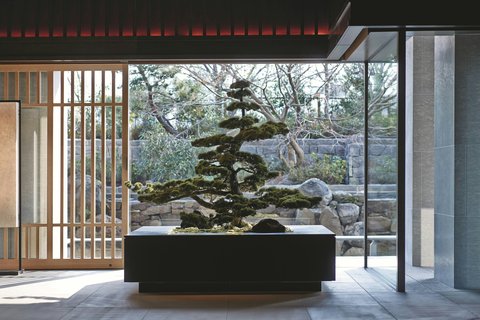
"A central riverside address with a heated 20 metre indoor pool, four Mizuki counters and a restored 1908 Meiji residence housing the Italian restaurant."
9.3Room & Design
9.5Service
9.5Location
Why this rank: The Ritz-Carlton, Kyoto stands out for its riverbank site and for one restored Meiji building, not for scale or novelty. The hotel occupies the west bank of the Kamo River at Nijo bridge, land favoured by Japanese nobility since the 17th century, and looks east across the water towards the Higashiyama mountains. The position sits between Nijo Castle and the Kawaramachi shopping and dining district, which is about as central as genuine luxury gets in this city. The most distinctive thing on the property is the restored 1908 residence of Denzaburo Fujita, founder of the Fujita industrial group. That wood-panelled Meiji-era dining room survives inside the modern hotel and now houses the Italian restaurant La Locanda, so dinner happens inside a real piece of Kyoto history rather than a reproduction of one. The hotel holds one MICHELIN Key, which is the guide's hotel award and not a restaurant star. It also runs an unusually deep cultural workshop programme on site, from tea ceremony through to origami sessions pitched at children, which makes it one of the more credible serious hotels in Kyoto for families.
Best for: Travellers who want a central riverside base with a 20 metre indoor pool and serious Japanese dining
#10 in Kyoto
Takagamine foothills near Kinkaku-ji · Five-Star · rates on request

"Home to what Michelin calls the only outdoor natural onsen thermal pool in Kyoto city, set in a river valley near Kinkaku-ji."
9.2Room & Design
9.2Service
8.6Location
Why this rank: ROKU KYOTO's claim is specific and unusually easy to verify: the MICHELIN Guide singles the hotel out for what is considered Kyoto's only outdoor natural onsen thermal pool, open year-round. The water is genuine hot spring water, drawn from the adjoining Shozan Resort Kyoto grounds, and guests bathe in it rather than swim laps. Nowhere else inside the city offers that particular combination. The setting supports it. The hotel sits in the northern foothills of Takagamine, on the Tenjin river, inside a 28.6-acre estate that was historically an artists' colony, roughly 15 to 17 minutes on foot from Kinkaku-ji, the Golden Pavilion. It opened in September 2021 as the first LXR Hotels & Resorts property in Asia-Pacific, and it holds one MICHELIN Key, the guide's hotel award rather than a restaurant star. MICHELIN's inspectors also note the hotel as family-friendly, which is rare among Kyoto properties at this level. Read ROKU as a river valley retreat that happens to be within the city limits, not as a base for walking to temples and restaurants.
Best for: Onsen bathing and a forest retreat inside the city limits, including families
#11 in Kyoto
Arashiyama, on the Hozu river · Five-Star · rates on request
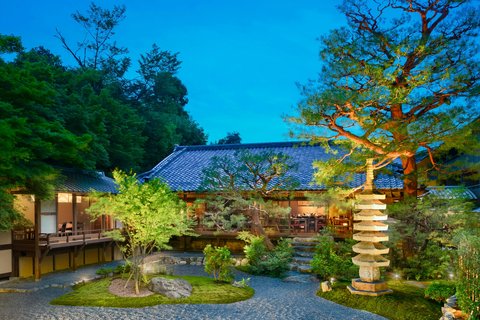
"A thirty nine room Meiji villa beside Tenryu-ji, with private in room hot spring baths in seventeen rooms and a walled garden off the tourist route."
9.1Room & Design
9.2Service
8.8Location
Why this rank: Suiran's distinction is the gate. The hotel stands on the site of a Meiji-era summer villa, inside the former grounds of Tenryu-ji, and is entered through a private gate directly off the Arashiyama tourist route, so you step from one of the busiest sightseeing streets in Japan into a walled riverside garden. Few contrasts in Kyoto are as abrupt or as welcome. The setting does the rest. The Hozu river runs below the property, the Arashiyama hills rise across the water, the UNESCO-listed Tenryu-ji temple is immediately adjacent, and the Sagano bamboo grove and the Hozu-gawa riverboats are both within reach on foot. This is the only hotel on our Kyoto list that puts you inside the Arashiyama experience rather than delivering you to it by taxi each morning. Scale matters too. With 39 rooms, Suiran is small enough to feel like a private house and old enough, as a site, to carry real history. Note that we could not verify a MICHELIN Key for the property, so we claim none, and no restaurant here holds a star.
Best for: Arashiyama early and late, and private in-room hot spring bathing
#12 in Kyoto
Near Nishi Honganji, by Kyoto Station · Five-Star · rates on request
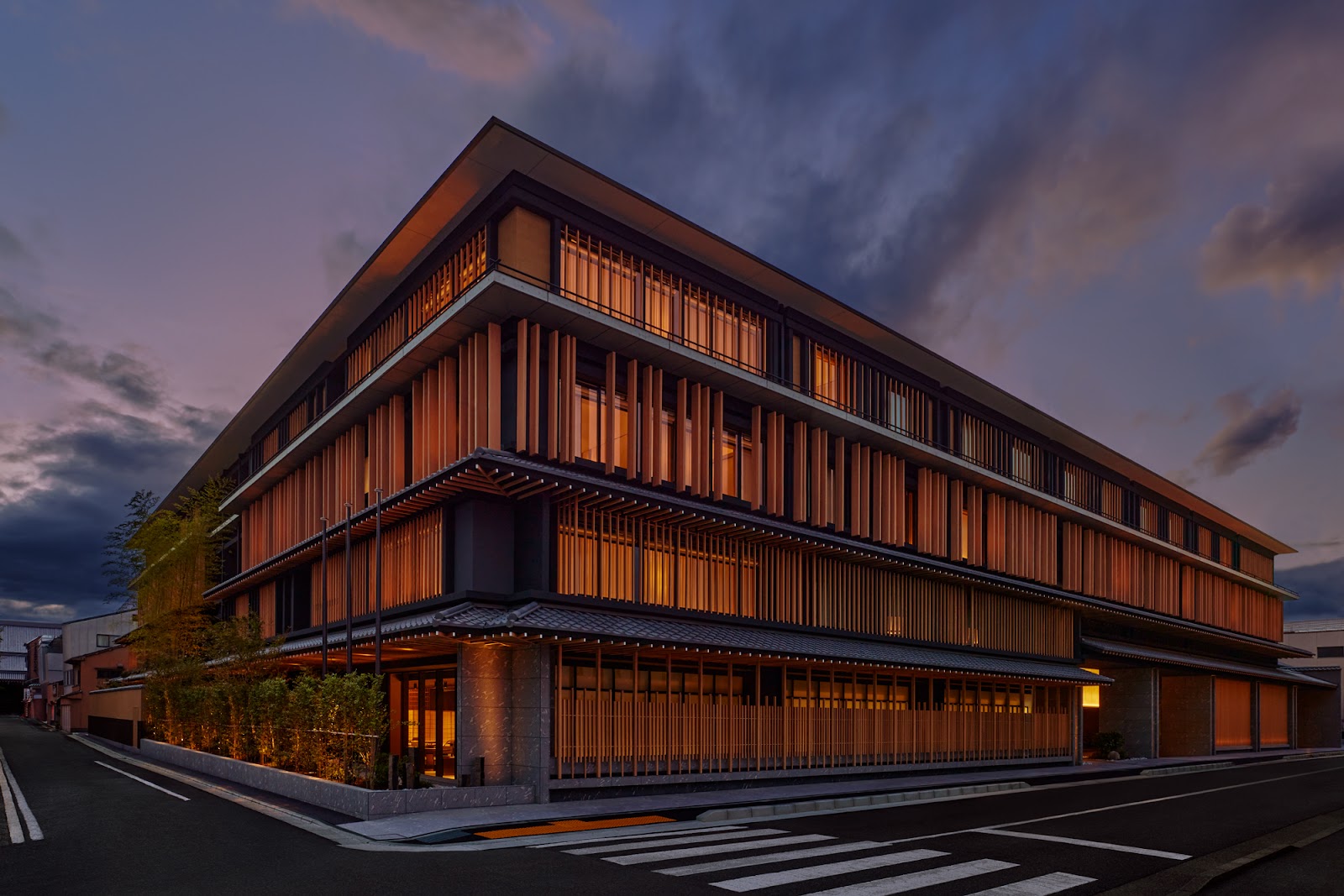
"Thai luxury beside Nishi Honganji, with big rooms, an indoor pool and Devarana Wellness bringing traditional Thai therapies to Kyoto for the first time."
9.0Room & Design
9.1Service
9.1Location
Why this rank: Dusit Thani Kyoto's point of difference is Thai, not Japanese. Devarana Wellness brings traditional Thai therapies to Kyoto for the first time, and the Devarana Signature Massage blends Thai, Ayurvedic, shiatsu and Swedish technique in one treatment. No other hotel in the city makes that offer, and it is a genuine reason to choose this one. The Thai and Japanese pairing runs through the whole property, right down to Ayatana's contemporary Thai kitchen sitting alongside Kōyō, a Japanese and teppanyaki restaurant built around Kyoto's 24 micro-seasons. The second distinction is location logic. The hotel stands in the temple quarter around Nishi Honganji, a UNESCO World Heritage Site, about 10 minutes on foot north-west of Kyoto Station, which makes it the easiest arrival on our Kyoto list for anyone coming by Shinkansen or from the airport with luggage. It opened in September 2023, the Thai group Dusit's first property in Japan, and it holds one MICHELIN Key, which the guide awards to hotels for a very special stay. Read it as a well-equipped, family-capable city hotel rather than as a romantic Kyoto fantasy.
Best for: Families and Shinkansen travellers who want space, an indoor pool and Thai spa therapies