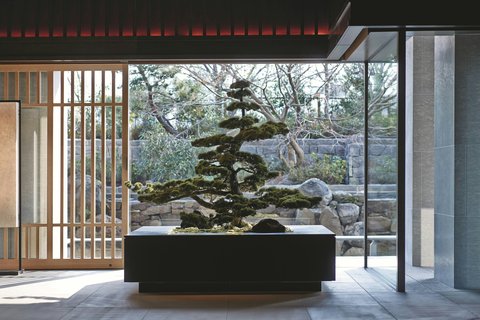
#9 in Best Luxury Hotels in Kyoto 2026 · ★★★★★
The Ritz-Carlton Kyoto
Kamogawa riverside at Nijo · rates on request
Kamogawa riverside at Nijo · rates on request
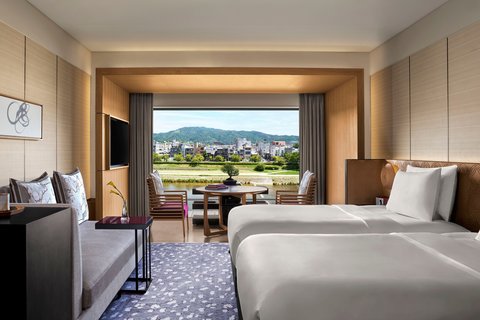
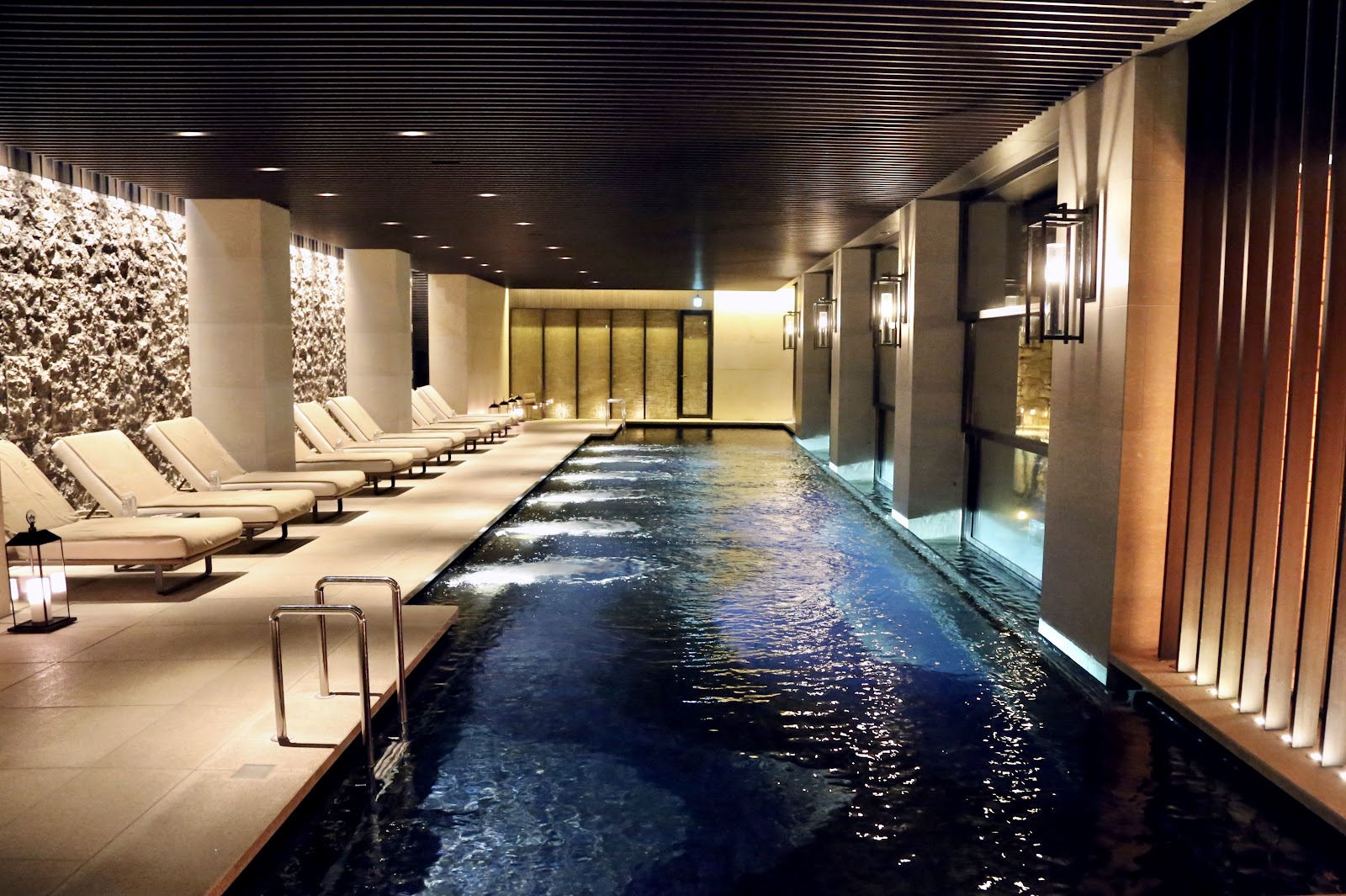
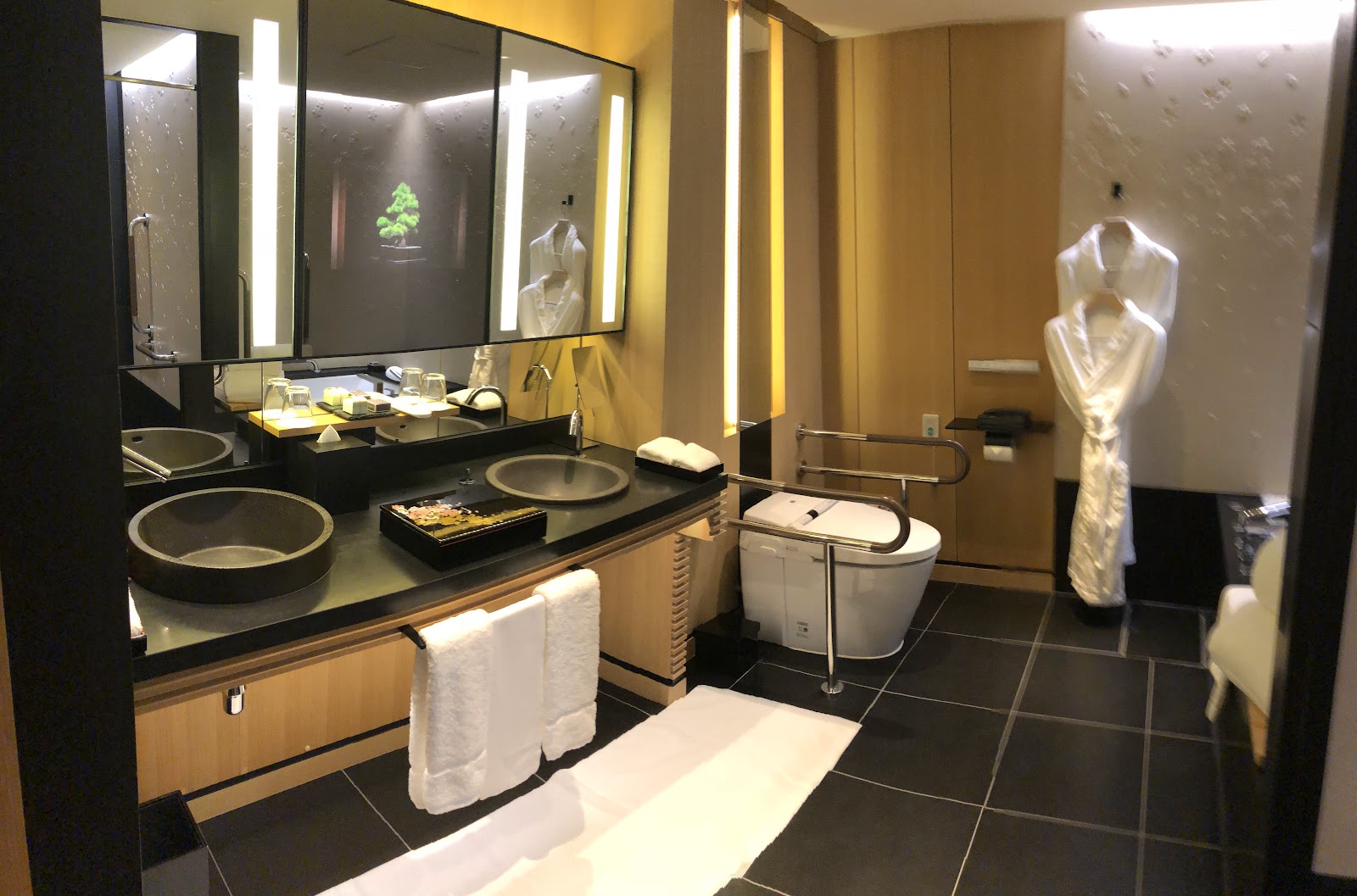
The Ritz-Carlton, Kyoto is the strongest central choice for travellers who want a river address and a real swimming pool. It holds one MICHELIN Key, runs the four-part MIZUKI restaurant group behind a cascading waterfall, and keeps a heated 20 metre indoor pool. Rooms read restrained rather than opulent, and breakfast underwhelms.
"A central riverside address with a heated 20 metre indoor pool, four Mizuki counters and a restored 1908 Meiji residence housing the Italian restaurant."
Aggregate 9.4/10 on our editorial scale (Room & Design, Service, Location). Independently scored; see our methodology. This is our opinion, not an aggregate of user reviews.
Affiliate disclosure: we may earn a commission from bookings at no cost to you. We never accept payment for placement. Hotel status, room product and Michelin ratings were verified against official sources and the current Michelin Guide in July 2026.
The Ritz-Carlton, Kyoto stands out for its riverbank site and for one restored Meiji building, not for scale or novelty. The hotel occupies the west bank of the Kamo River at Nijo bridge, land favoured by Japanese nobility since the 17th century, and looks east across the water towards the Higashiyama mountains. The position sits between Nijo Castle and the Kawaramachi shopping and dining district, which is about as central as genuine luxury gets in this city. The most distinctive thing on the property is the restored 1908 residence of Denzaburo Fujita, founder of the Fujita industrial group. That wood-panelled Meiji-era dining room survives inside the modern hotel and now houses the Italian restaurant La Locanda, so dinner happens inside a real piece of Kyoto history rather than a reproduction of one. The hotel holds one MICHELIN Key, which is the guide's hotel award and not a restaurant star. It also runs an unusually deep cultural workshop programme on site, from tea ceremony through to origami sessions pitched at children, which makes it one of the more credible serious hotels in Kyoto for families.
The Ritz-Carlton, Kyoto has 134 guest rooms and suites, which makes it mid-sized by international standards and generous by Kyoto ones, where several rivals run under 100 keys. Japanese motifs run through the accommodation throughout, and the register is quiet rather than opulent, which is the single most common observation in reviews of the hotel. Guests who expect a Ritz-Carlton to announce itself often find the effect underplayed. Reviewers also note that the rooms are smaller than those at newer regional rivals such as Six Senses, Banyan Tree and Capella, all of which opened from 2024 onwards. Ask specifically about outlook when you book. The hotel sits on the west bank of the Kamo River and faces east towards the Higashiyama mountains, so aspect is the variable that most changes the experience of a room here, and it is worth naming your preference in writing rather than hoping. We have not verified current rates or individual room dimensions, so treat any figure quoted elsewhere with caution.
Dining is the strongest part of the hotel, and the MIZUKI group is the reason. Four separate Japanese restaurants sit behind a cascading waterfall: Kaiseki MIZUKI, Sushi MIZUKI, Tempura MIZUKI and Teppan MIZUKI, a rare concentration of Japanese disciplines under one roof. Tempura MIZUKI runs an eight-seat private counter under chef de cuisine Taisuke Kojima, who fries in first-press safflower oil and works with vegetables from Takagamine and Shugakuin and seafood from Awaji and Shizuoka. Be careful with its awards: Tempura MIZUKI is MICHELIN Guide-listed and has held a star in past editions, but we cannot verify a current star, so do not book it expecting one. La Locanda serves Italian food in the restored 1908 Fujita residence, a wood-panelled Meiji dining room that is worth seeing whether or not you eat there. The Lobby Lounge and THE BAR handle drinks and afternoon service, and a PIERRE HERMÉ PARIS boutique with an open pastry kitchen sits on site. Breakfast is the acknowledged weak link, with a limited buffet, a short à la carte menu and in-room rules that reviewers find confusing.
The spa is one of the few in Kyoto built around a real swimming pool. The Ritz-Carlton, Kyoto has a heated 20 metre indoor pool, which matters in a city where Aman Kyoto, Park Hyatt Kyoto, Capella Kyoto, Banyan Tree Higashiyama and Suiran all have none. Alongside it are six treatment rooms plus a spa suite, a waterfall feature, a steam room and a dry sauna. What the hotel does not have is a natural hot spring. Bathing here is spa bathing, not onsen, so travellers whose priority is thermal water should look at ROKU KYOTO, Suiran or Banyan Tree Higashiyama instead. For anyone travelling with children, or anyone who wants to swim lengths in the morning and then walk into central Kyoto, this combination is hard to beat at this address.
The location is the hotel's clearest advantage: central, riverside and walkable. The Ritz-Carlton sits on the west bank of the Kamo River at Nijo bridge in Nakagyo ward, between Nijo Castle and the Kawaramachi shopping and dining district. Kawaramachi is about a mile away, roughly 15 minutes on foot, so dinner outside the hotel does not require a taxi. Gion and Higashiyama are approximately 15 to 20 minutes on foot east across the river, or under 10 minutes by taxi, which is a real advantage over the northern hill properties. Kyoto Station is approximately 10 to 15 minutes by taxi, putting the Shinkansen hub within easy reach for day trips to Osaka and Nara. From Kansai International Airport, allow approximately 90 minutes by car, or take the JR Haruka limited express to Kyoto Station in about 75 minutes and finish by taxi. The trade-off is that this is a working central district rather than a temple lane, so the drama of Kyoto starts a few minutes from the door rather than at it.
Guest sentiment splits along a clear line: people who come for the site, the pool and the MIZUKI counters leave happy, while people who come expecting the best hotel in Kyoto often do not. Reviewers consistently praise the riverside setting, the cultural programme and the Japanese restaurants, and they consistently criticise breakfast, which is described as a limited buffet with a short à la carte list and confusing in-room ordering rules. The other recurring theme is comparison. When this hotel opened in 2014 it had few peers in the city. Since then Aman Kyoto, HOTEL THE MITSUI KYOTO, Six Senses, Banyan Tree Higashiyama and Capella have all opened, and several reviewers now describe the Ritz-Carlton as competent rather than remarkable for the money, with service consistency slipping relative to the newer field. Read that as a warning about expectations rather than about quality: the fundamentals here are sound, and the address is one the newcomers cannot copy.
Three criticisms recur, and all three are fair. First, the rooms feel restrained rather than opulent and are smaller than those at the newer regional rivals, so guests arriving with a Ritz-Carlton mental image of grandeur can find the reality understated. Second, breakfast is a genuine weak point. Reviewers report a limited buffet, a short à la carte menu and in-room breakfast rules that are hard to follow, which is a poor showing at this level in a city full of better morning food. Third, service consistency has slipped relative to the field. Aman Kyoto, Six Senses, Banyan Tree Higashiyama, HOTEL THE MITSUI KYOTO and Capella have all opened since 2019, and several reviewers now say the Ritz-Carlton is no longer remarkable for the money. Add two structural limits: there is no natural hot spring here, and Tempura MIZUKI's current MICHELIN star status cannot be verified, so do not choose the hotel on the assumption of either.
Yes. The spa contains a heated 20 metre indoor swimming pool, alongside six treatment rooms plus a spa suite, a waterfall feature, a steam room and a dry sauna. That makes it one of only four hotels on our Kyoto list with a true swimming pool rather than a thermal bathing pool.
No star can be verified for 2026. Tempura MIZUKI held one MICHELIN star in past editions, but a 2026 guide summary lists it as Selected and the restaurant's own page no longer claims a star. The hotel itself holds one MICHELIN Key, which is a hotel award, not a restaurant star.
No. There is no natural hot spring at The Ritz-Carlton, Kyoto, and bathing is limited to the spa's pool, steam room and dry sauna. For genuine hot spring water in Kyoto, ROKU KYOTO, Suiran and Banyan Tree Higashiyama all draw on a natural source on site.
Gion and the Higashiyama temple district are approximately 15 to 20 minutes on foot east across the Kamo River, or under 10 minutes by taxi. Kyoto Station is approximately 10 to 15 minutes by taxi, and the Kawaramachi dining district is about a mile, roughly 15 minutes on foot.
It depends on your priorities. Choose it for a central riverside address, a 20 metre pool and four Japanese restaurants under one roof. Choose Aman Kyoto, Six Senses or Banyan Tree Higashiyama for hot spring bathing, a forest setting or a newer build. Several reviewers now rate it competent rather than remarkable.
Off peak pricing, suite upgrades, and subscriber only offers, flagged only when the value is real.